Building Research Through Relationships
A message from RAA Director of Research, Dr Helen Green
One of the most valuable parts of my role as Director of Research is the opportunity to see Rock Art Australia (RAA)-supported projects operating on the ground.
For me, these visits are an important part of RAA’s research oversight. Reading proposals and reports tells us what a project intends to achieve; being on Country allows us to see how those intentions are expressed through relationships, participation and tangible outcomes. It also helps RAA understand where investments, supporting community participation, facilitating connections or enabling researchers to share field logistics, can strengthen research and contribute to outcomes that extend well beyond the immediate project.
This year I joined Paul Hartley’s Kimberley Program: Kalumburu Women’s Cultural Education Engagement Project and Sam Boone’s Rock Art Shelter Research in the Drysdale River region, giving me the opportunity to see research partnerships in practice, and spend time with Traditional Owners (TOs), Ranger Groups and other local organisations, to better understand where RAA support can contribute most effectively.
For Paul Hartley’s project, RAA’s Strategic Grant specifically supports Traditional Owner participation and engagement alongside the broader field program, recognising local knowledge, authority and perspectives as integral to informing how places are understood and how research is undertaken and shared.
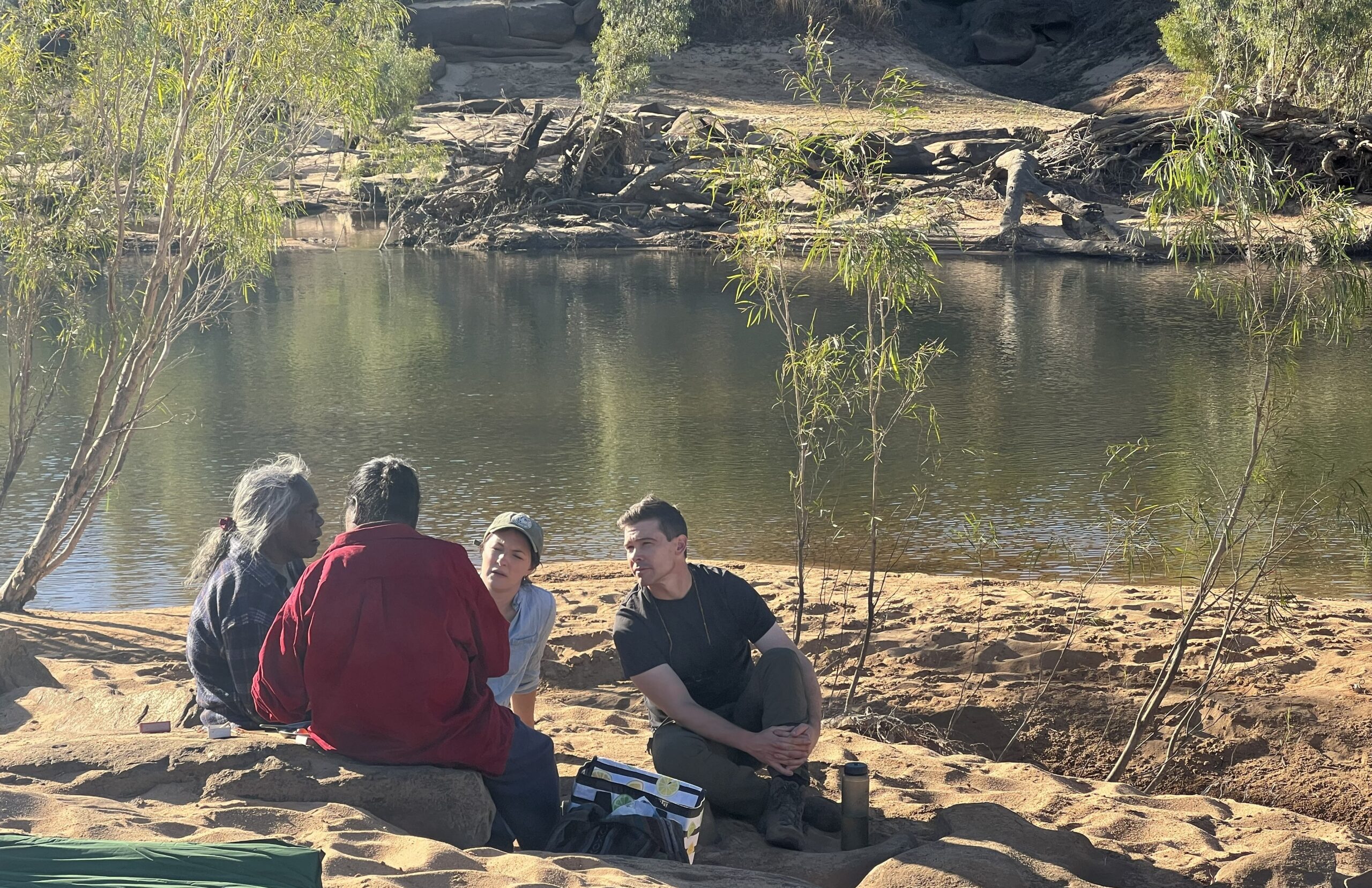
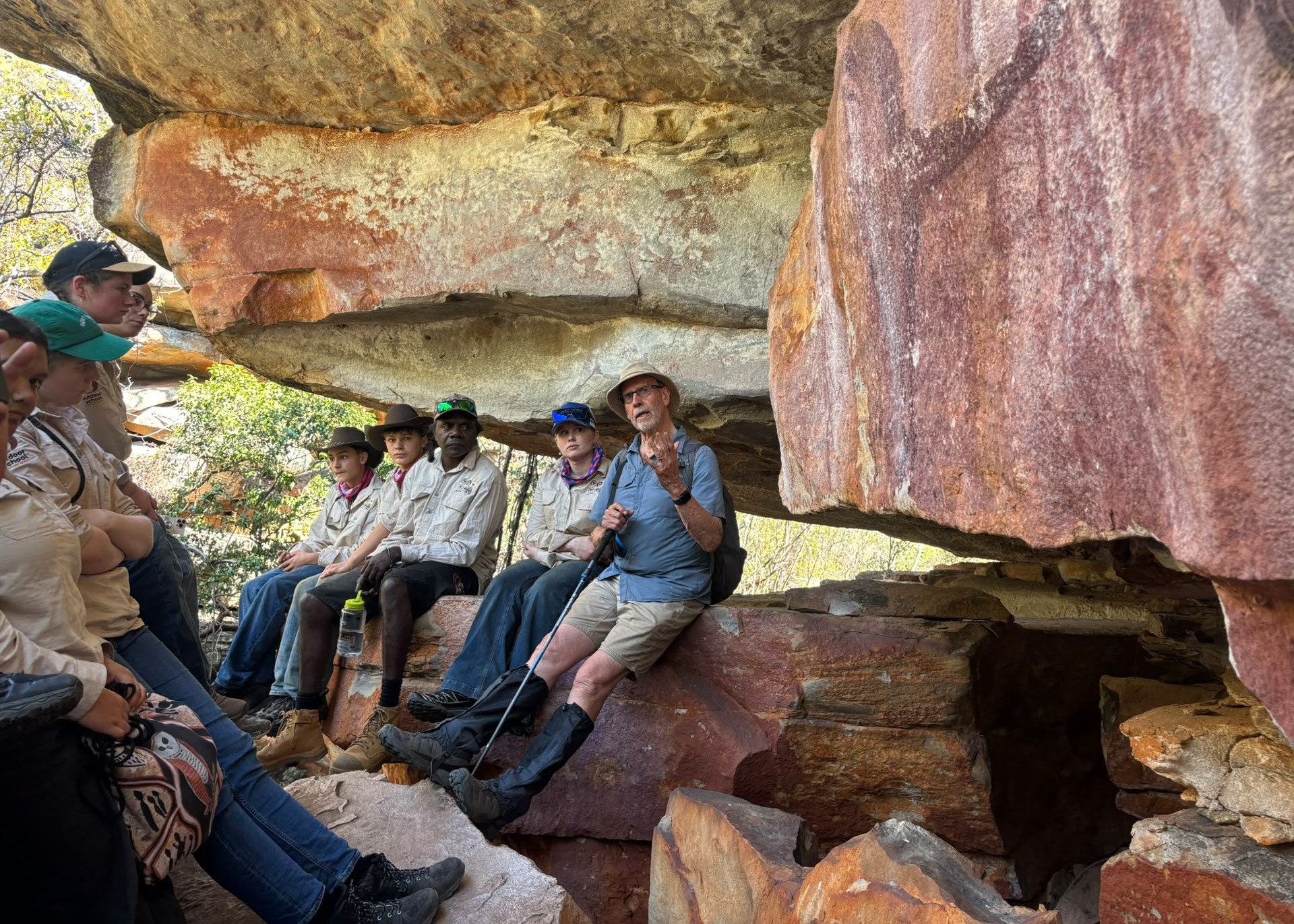
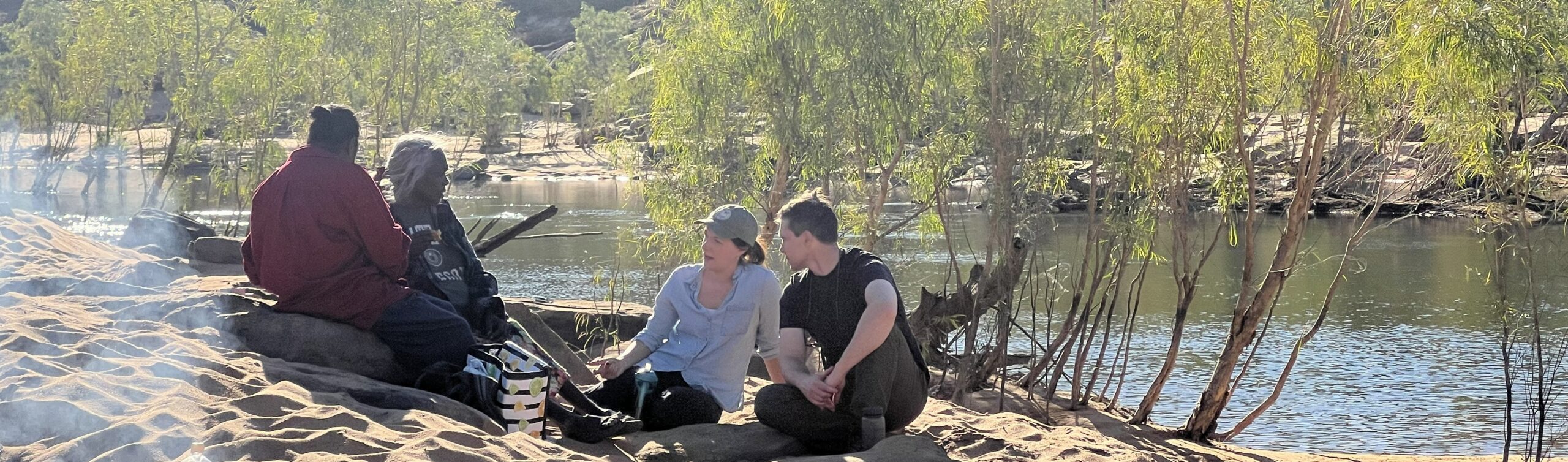
With Dorothy Djangara unfortunately unable to join us this year, TOs Ian, Bernadette and Melissa Waina spent several days at camp sharing stories, experiences and perspectives with students from the Victorian Outdoor Education School and researchers from the University of Sydney.
For the Victorian students, this meant learning firsthand about the stories depicted in the rock art and understanding the responsibilities that come with undertaking research on Country. It provided an opportunity to understand scientific research within its cultural and local context and demonstrated something fundamental to good research on Country: knowledge exchange is not an addition to the research process, but an integral part of it.
A return visit to Kalumburu School provided local students with an opportunity to meet the research team and Victorian students and learn about the work taking place in their region.
There is also a practical research benefit to working in this way. Remote Kimberley fieldwork can be logistically complex and expensive, particularly for smaller or exploratory projects. Paul’s established field program provides opportunities for researchers to coordinate and share logistics, making it possible to undertake preliminary visits and develop future research collaboratively, with relationships and local knowledge informing the direction of the work from the outset rather than beginning with a fully formed research program developed from afar.
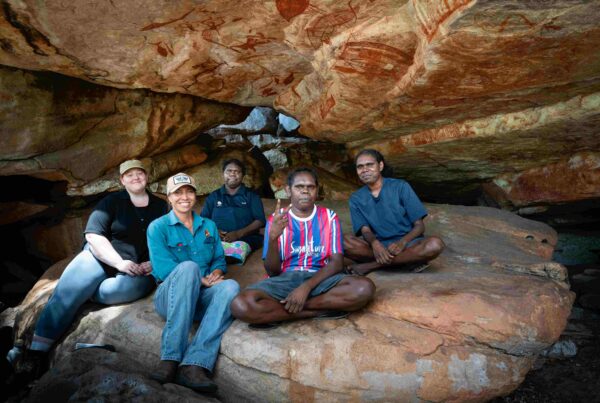
This was particularly relevant to Sam Boone and his team. Their visit was deliberately exploratory: an opportunity to spend time on Country, meet Traditional Owners and ranger representatives, engage with Kalumburu Aboriginal Corporation and the Department of Biodiversity, Conservation and Attractions (DBCA), and listen to local perspectives as part of determining what future research might be appropriate and what permissions need to be obtained to develop responsible and collaborative research on Country.
Ultimately, strong rock-art research is not simply research about Country. The projects that RAA supports are increasingly demonstrating what it means to undertake research with people, on Country, in ways that respect local knowledge and authority while building local capability and benefit.