Welcome
One of the most rewarding aspects of being part of Rock Art Australia is seeing our community continue to grow. What began with a commitment to supporting important rock art research in Australia is now connecting researchers, Traditional Owners, communities and institutions across Australia and internationally.
This edition provides a snapshot of that growing network. From west Arnhem Land to Borneo, the Kimberley to southern Victoria, RAA-supported research is bringing together expertise across Indigenous knowledges, archaeology, environmental science, geology, chemistry and rock art. New partnerships are extending the reach of Australian research, creating opportunities to share knowledge and develop new approaches to understanding our deep human history.
At the heart of this work are relationships. Research on Country is built through time, trust and collaboration with Traditional Owners and communities, alongside the expertise of researchers and partner organisations. These relationships strengthen research, support new collaborations and help build capacity for the next generation of archaeological and rock art science.
There is also urgency to this work. Rock art and archaeological sites face pressures from environmental change, development and the passage of time. Building the knowledge and partnerships needed to document, understand and protect these places is essential to ensuring their cultural and scientific significance is recognised for generations to come.
None of this would be possible without the RAA community. Our benefactors and donors provide essential support, while Traditional Owners, community members, researchers, students and partner organisations contribute their knowledge, expertise, time and connections.
I hope you enjoy this edition and, as I do, take pride in the breadth of work being supported by Rock Art Australia, from research and engagement across Australia to growing collaborations with communities, institutions and researchers internationally.
Thank you for being part of that journey.

Fiona Menzies, CEO
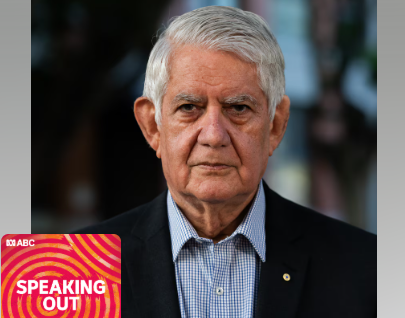
In this edition, we share a recent conversation between our Chair, the Hon Ken Wyatt AM JP, and Professor Larissa Behrendt on ABC Radio National’s Speaking Out, reflecting on his journey, leadership and aspirations for the future.
RAA’s Director of Research, Dr Helen Green, also reflects on the importance of being on Country and on how meaningful research is grounded in relationships with Traditional Owners, local knowledge and place.
You will also find updates on RAA-supported projects, recently published research and upcoming events, providing a closer look at the people, partnerships and discoveries that are shaping the field.
There are many ways to be part of this work. Whether by attending an event, sharing our newsletter with friends and colleagues, or contributing to our project fund, your support helps Rock Art Australia continue its mission to advance rock art research and support the protection of these remarkable places for future generations.
RAA Funded Research Projects
Human Responses to Post-Glacial Sea-Level Rise in Island Southeast Asia
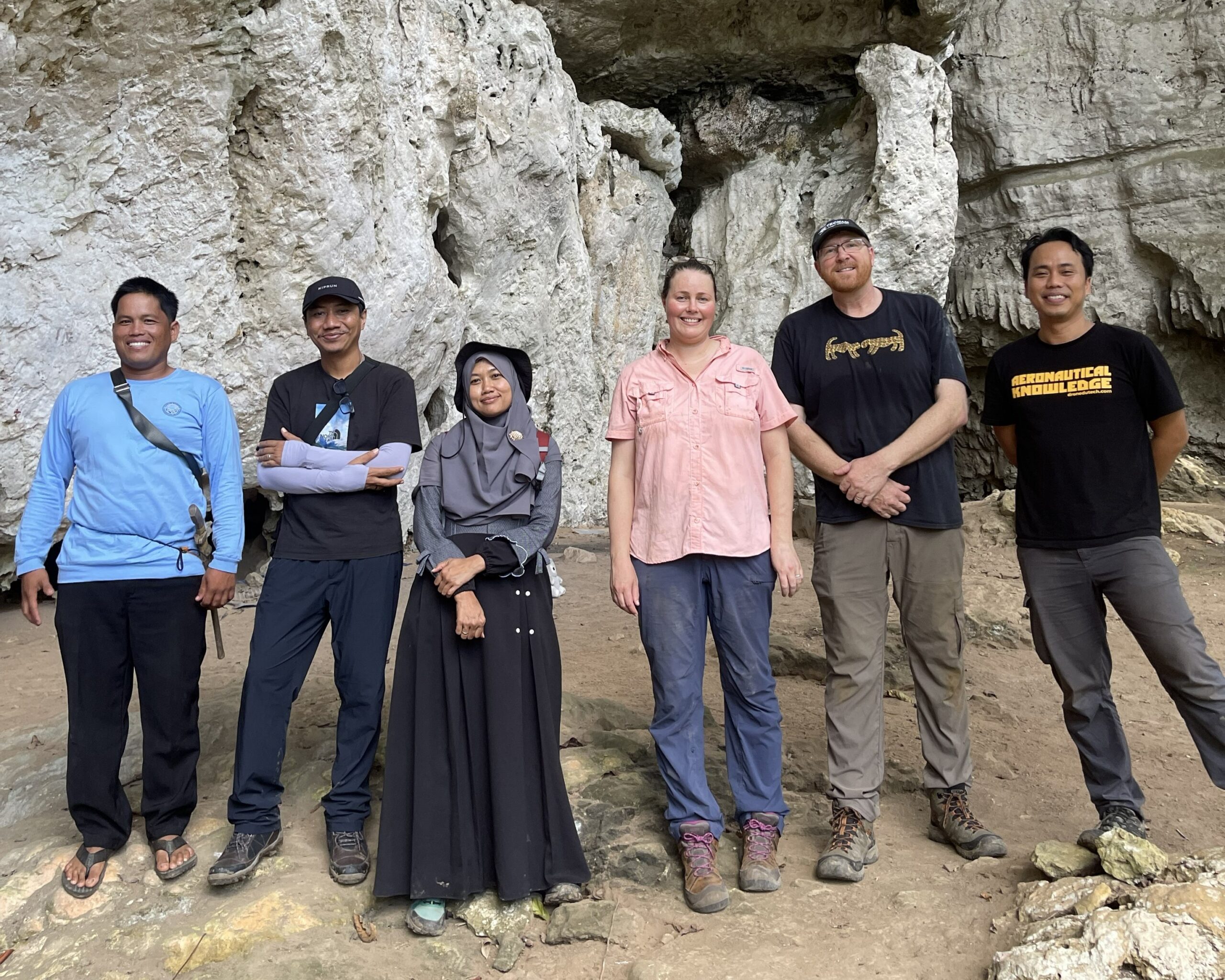
Some of the international team, left to right: Mr Hanafi (local government site curator), Restu Sulistiyo, Nia Fajari, Dr Kasih Norman, Professor Chris Clarkson, and Dr Anton Ferdianto.
The 2026 field season took our international Australian–Indonesian team into the spectacular landscapes of South Kalimantan in southeastern Borneo, where the rugged Meratus region gives way to dense tropical forest, winding rivers, limestone escarpments and isolated karst towers riddled with caves and rockshelters.
Over four weeks, the team explored this remarkable landscape in search of traces of the people who lived here as rising seas transformed Island Southeast Asia after the last Ice Age. The survey revealed an unexpectedly rich record of rock art alongside promising archaeological deposits preserving evidence of past human occupation.
The team documented rock-art sites using high-resolution photography and 3D recording techniques, collected carefully targeted samples for dating the art, and used geophysical survey and minimally invasive sediment coring to investigate what lies beneath cave and rockshelter floors to guide where future archaeological excavations should be placed.
The results have identified a series of exciting new research targets and provide the foundation for the next phase of the project: establishing when the rock art was created, reconstructing the history of human occupation in the region, and ultimately exploring how the lives and cultural traditions of people in Borneo changed as post-glacial sea-level rise reshaped the landscapes around them.
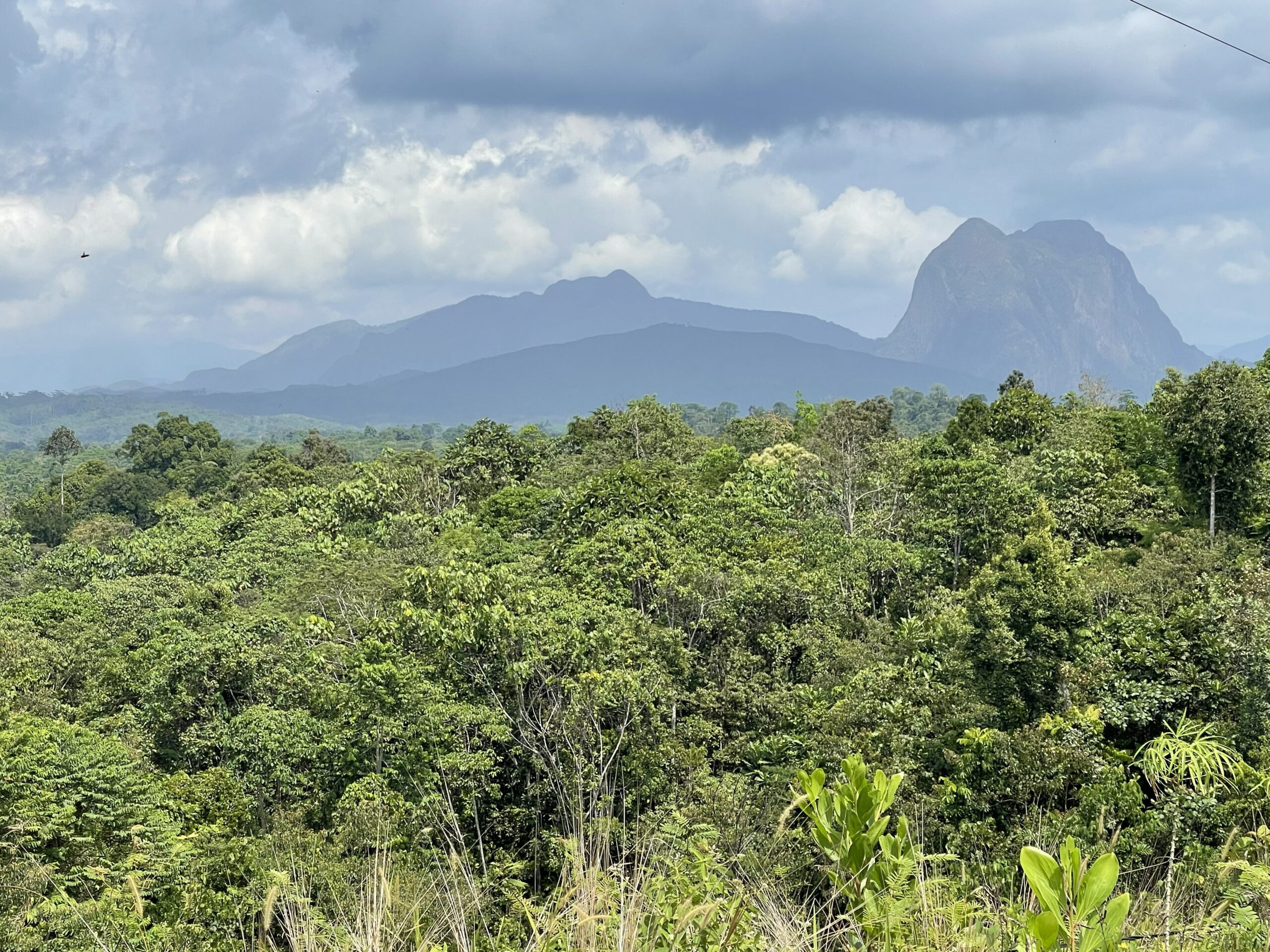
View of the jungle covered Meratus Mountain range, which runs through the team’s study region in South Kalimantan, southern Borneo.
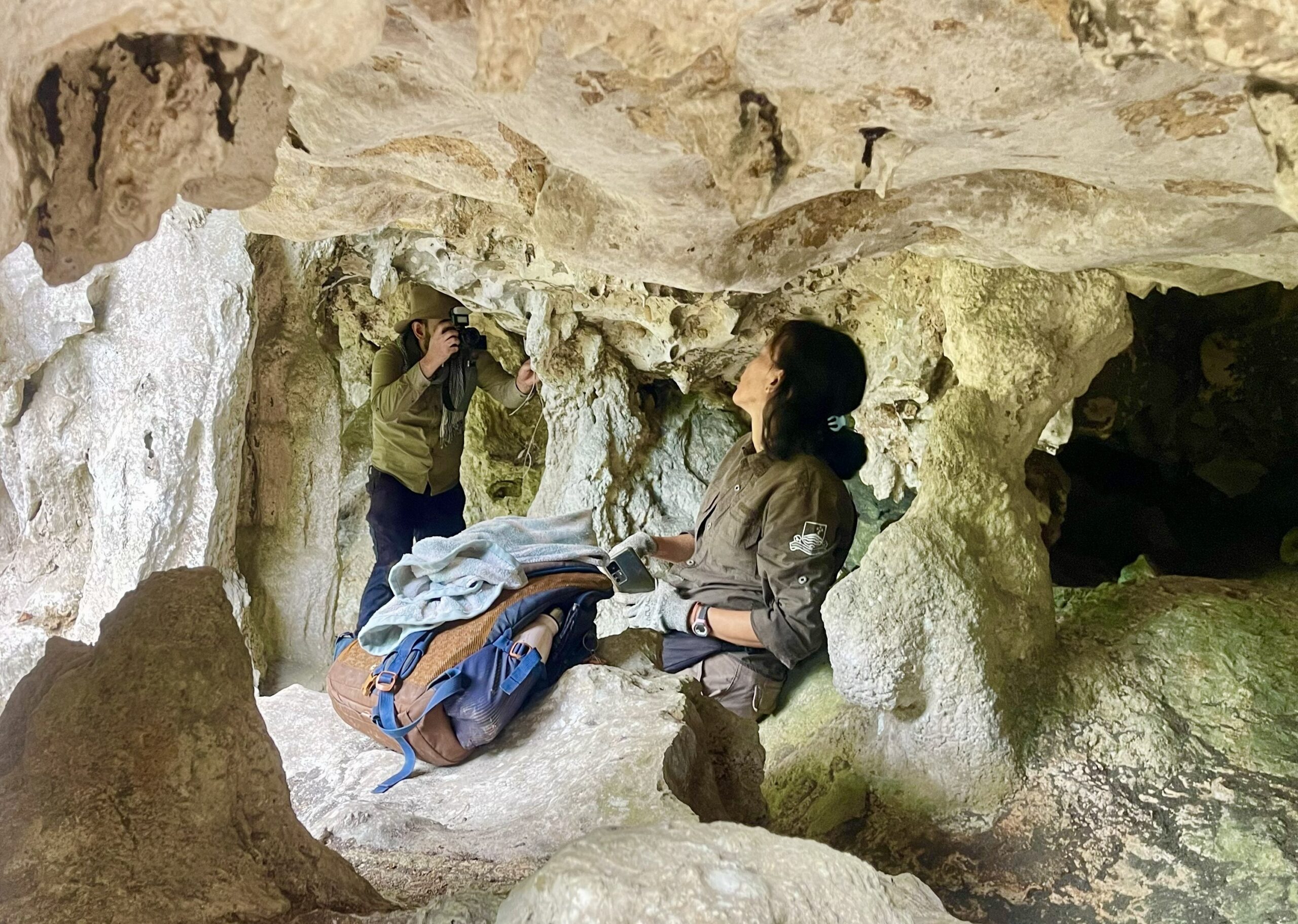
Team members Dr Alifah and Dr Jarrad Kowlessar working in a high cave chamber to record fragile rock art for conservation. They record the art using high resolution photography and photogrammetry to create 3D models of the rock art.
On Country in the Kimberley:
Building the Foundations for Rock Art Shelter Research
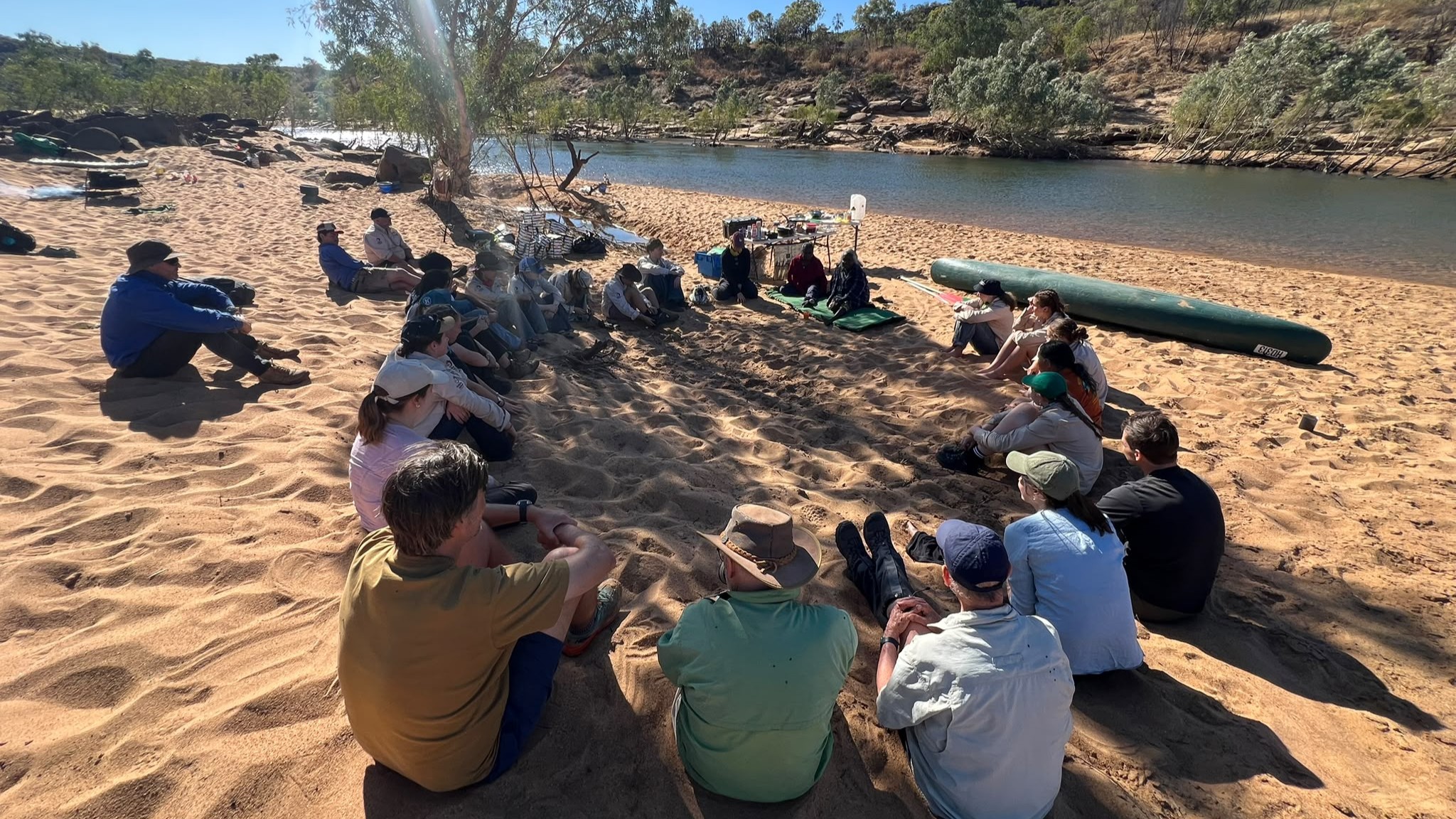
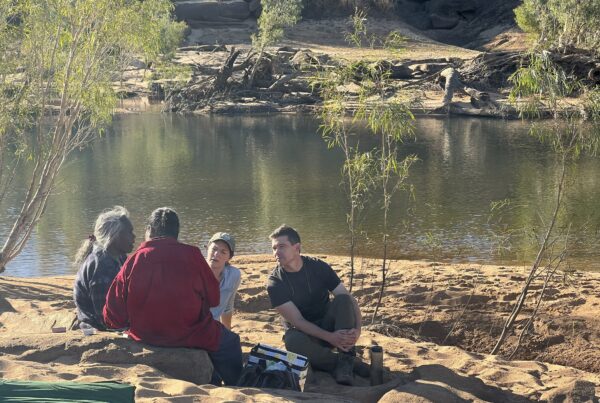
Yarning Circle
In July 2026, a team of University of Sydney and University of Melbourne researchers travelled to the Kimberley to take the first steps toward a new collaborative research project on the long-term geological processes that control the formation, stability, and eventual collapse of the sandstone rock shelters that house the Kimberley’s extraordinary rock art heritage.
Supported by a Rock Art Australia Community Engagement Grant, the team spent several days on country along the Drysdale River alongside Kwini elders Ian, Bernadette, and Melissa Waina, visiting rock art shelters, discussing the proposed research, and beginning the conversations that will shape how this work is carried out collaboratively with the Kwini community and Guini Rangers in the years ahead.
The team also met with the Balanggarra Aboriginal Corporation and RAA board members in Kalumburu and Broome. The trip was carried out in conjunction with the Outdoor Education School trip led by Paul Hartley, giving Victorian high school students a rare opportunity to learn about rock art science firsthand, inside the shelters themselves. Talks with Kwini elders, the Guini Rangers, and the Balanggarra Aboriginal Corporation toward a formal Memorandum of Understanding are progressing well, and the team looks forward to returning to country for the first full field season in the near future.
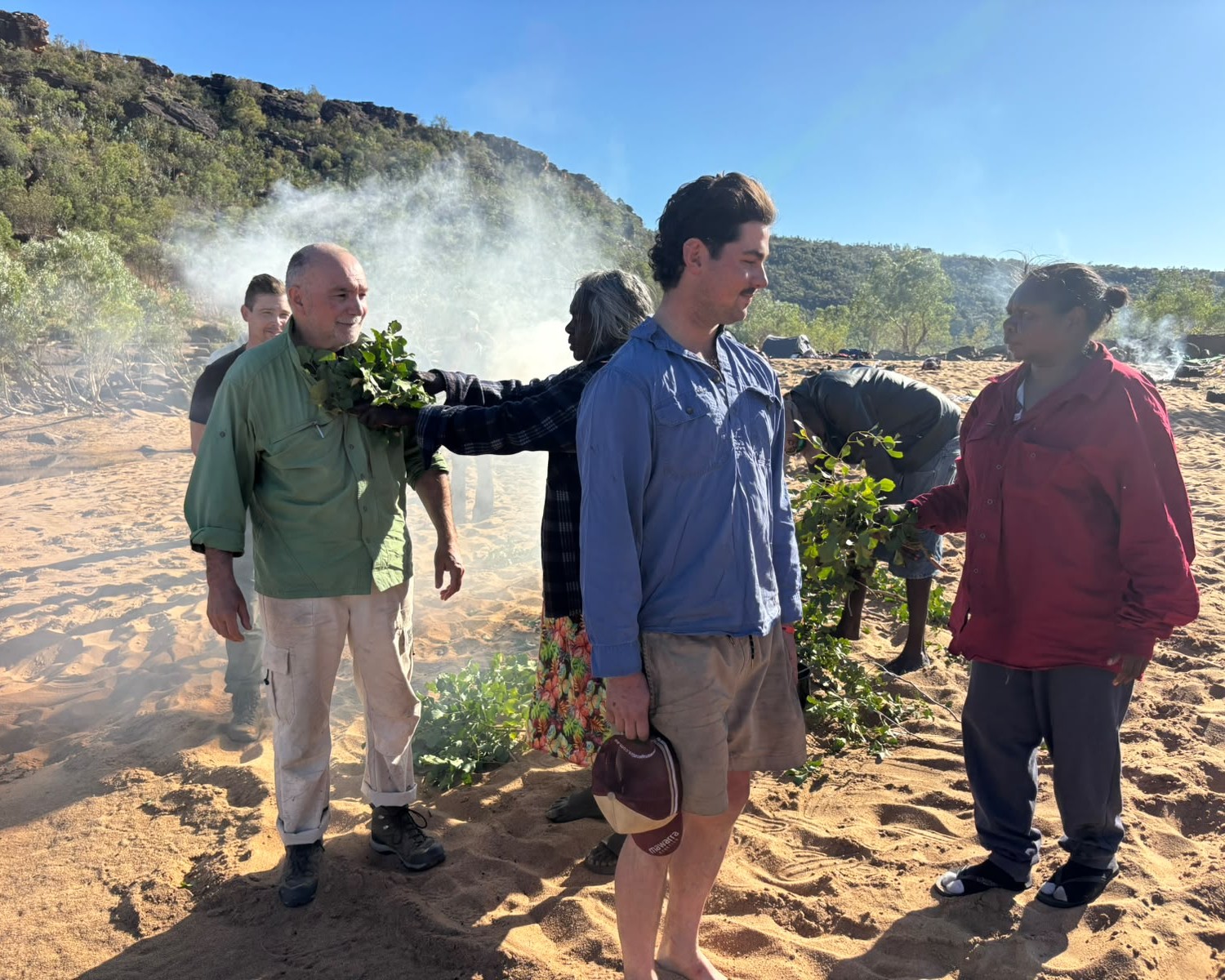
Traditional Owners Melissa, Bernadette and Ian Waina, welcoming researchers, Dr Sam Boone, Prof Patrice Rey, and Danile Forrest, with a smoking ceremony.
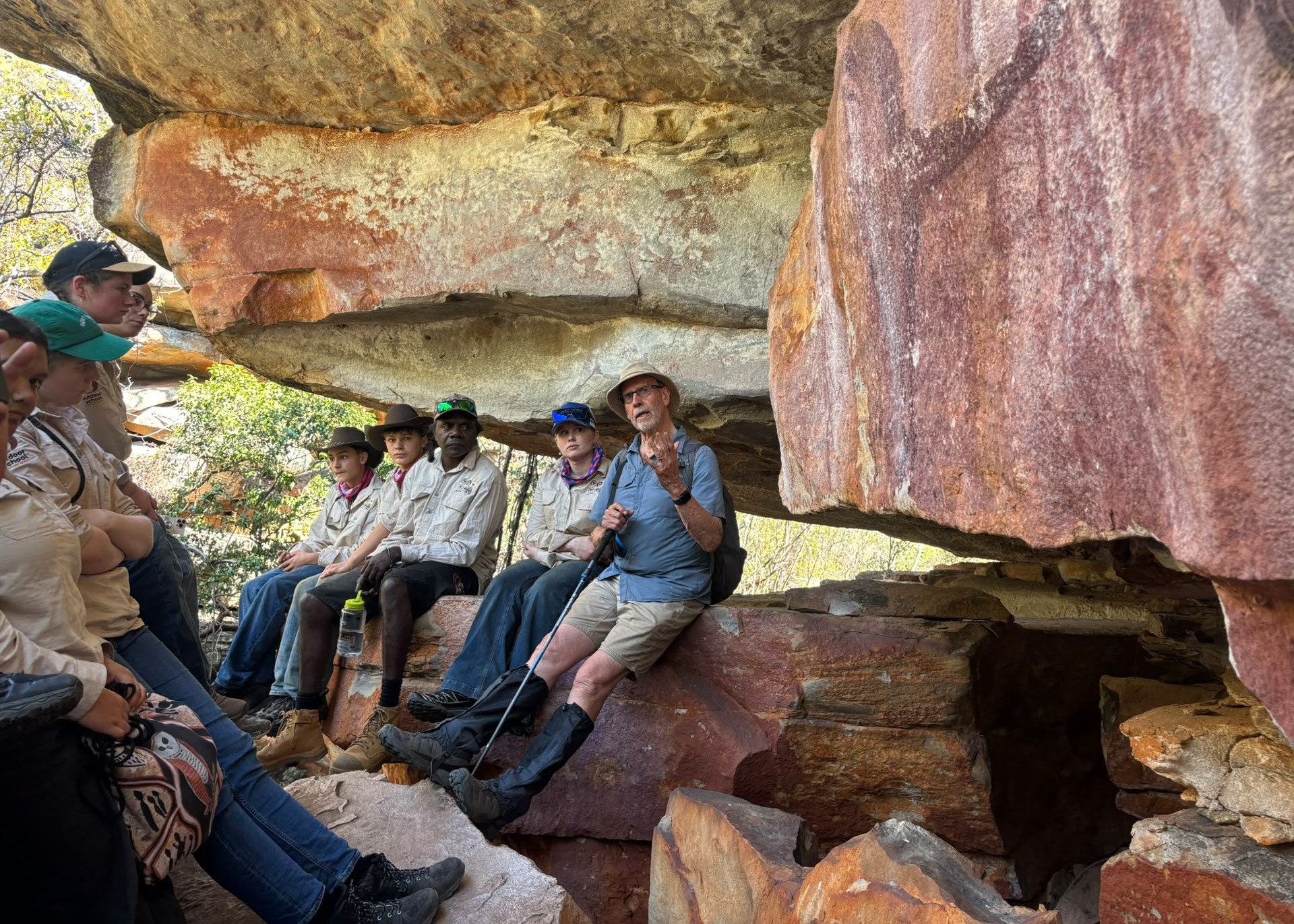
Visiting rock art shelters
The Kalumburu Women’s Cultural Education and Research Collaboration Project: Outdoor School’s Kimberley Pathways Program 2026
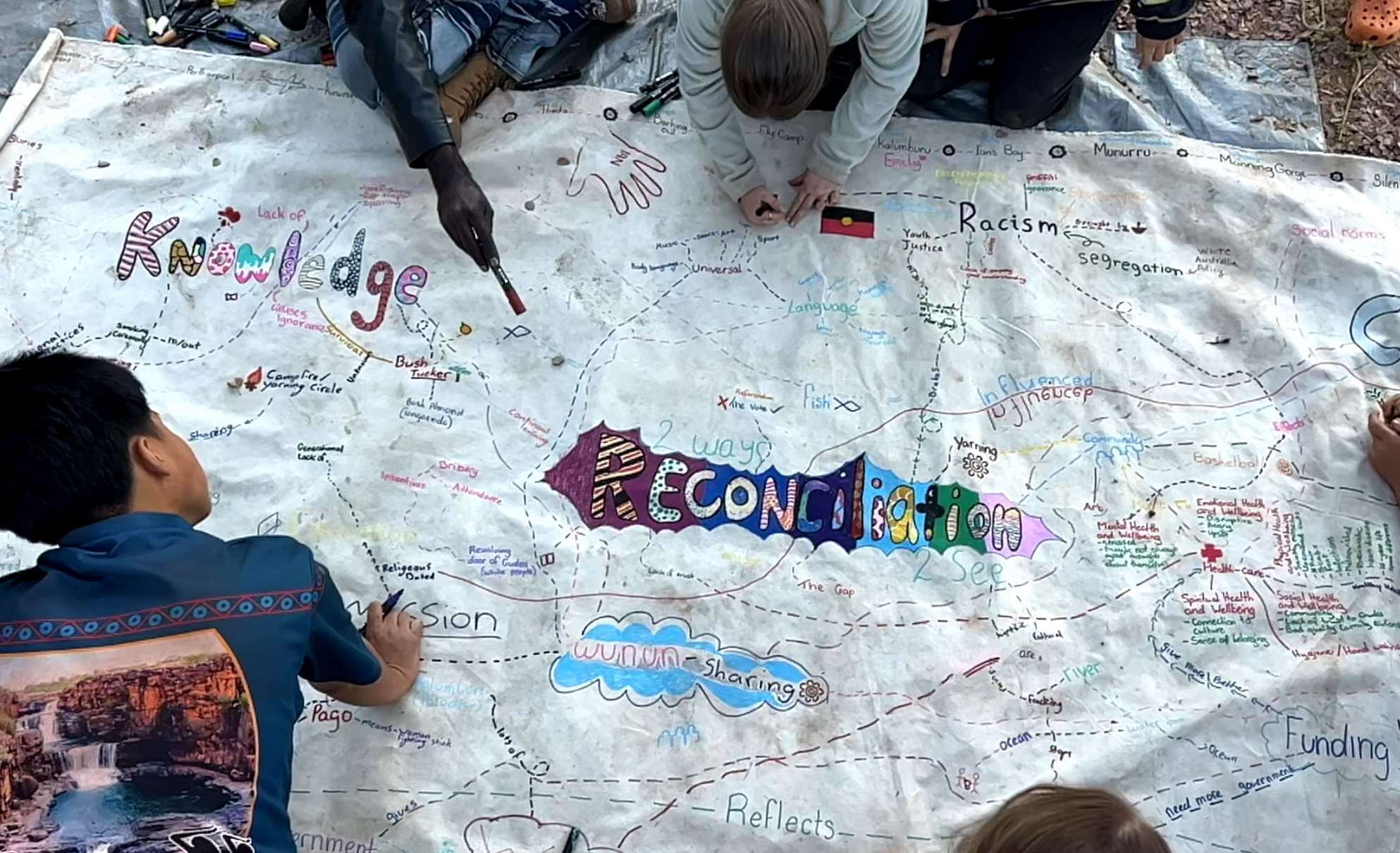
After the program, students take action to bring the Elders’ messages and lessons back to their home schools and communities, in the form of the Pathways Map, contributing to change towards reconciliation within the Victorian state education system.
The Women’s Cultural Education Engagement Project returned in 2026 as an important and high impact element of Outdoor School’s Kimberley Pathways Program, in partnership with Rock Art Australia.
Bernadette Waina and Melissa Waina joined Outdoor School students and the Rock Art Australia supported research team, on Kwini Country in July.
Bernadette and Melissa welcomed the group with a smoking ceremony, then led a yarning circle where students and researchers asked about culture, family and how life in Kalumburu has changed over time. Together with Bernadette, Ian and Melissa Waina, the group visited nearby cultural sites and camped overnight on Country.
The project’s aims of intergenerational learning, employment of community educators, and continuity opportunities for researchers were again met, through this collaborative and respectful series of interactions on Country between Community Elders, young Community leaders, students and the Rock Art Australia supported research team.
Students described the impact in their own words. One wrote, “Today was by far the most connected I have felt to country and people.” Another recalled being told, when a researcher asked during the yarning circle how to say thank you, that “you don’t say thank you, you do thank you, and you share.” Reflecting on Wunan, the principle of sharing, the same student said, “Here, Wunan is not said with words, it is done with actions.”
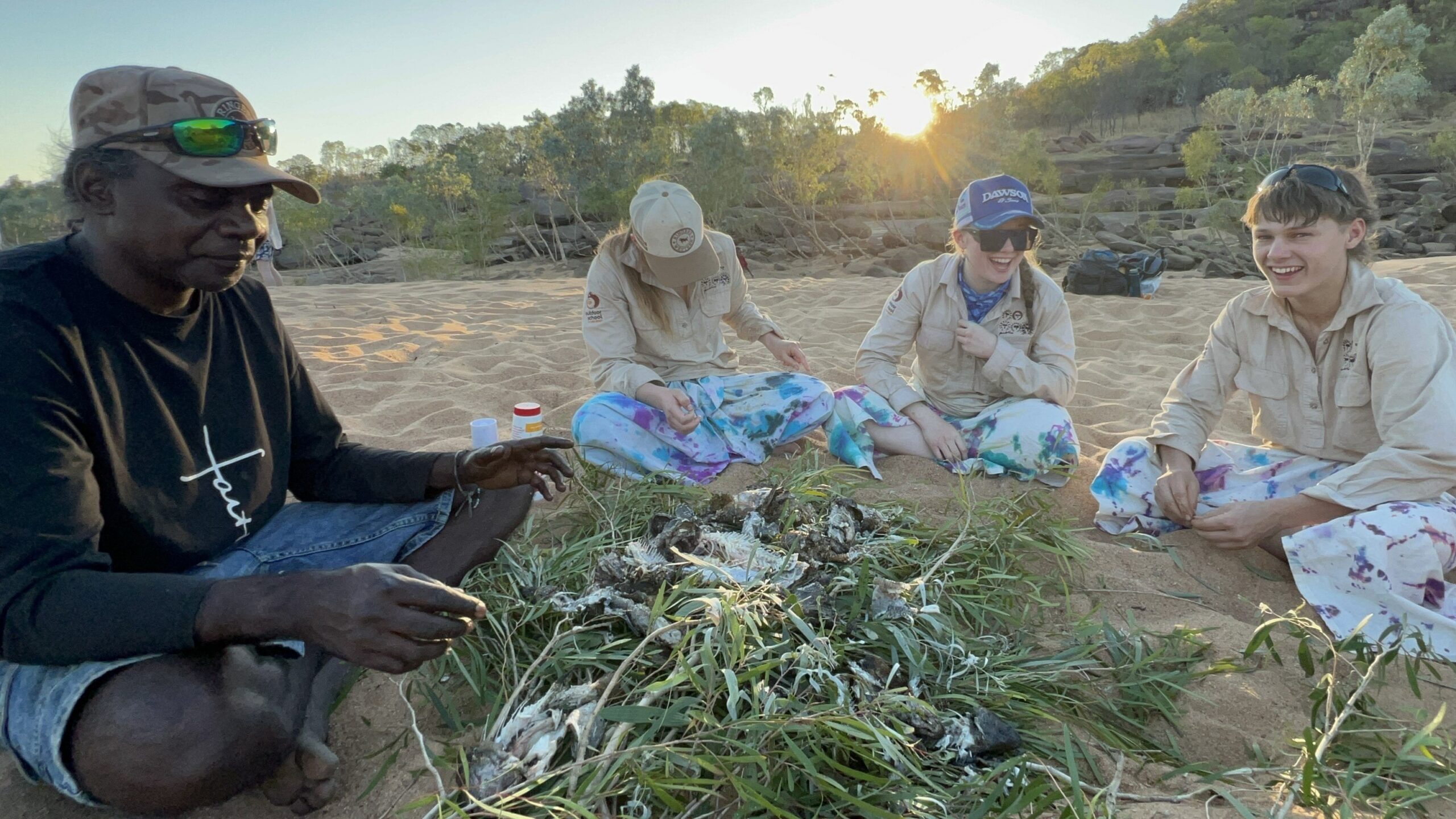
Ian Waina with Outdoor School students. Cooking fish on the fire
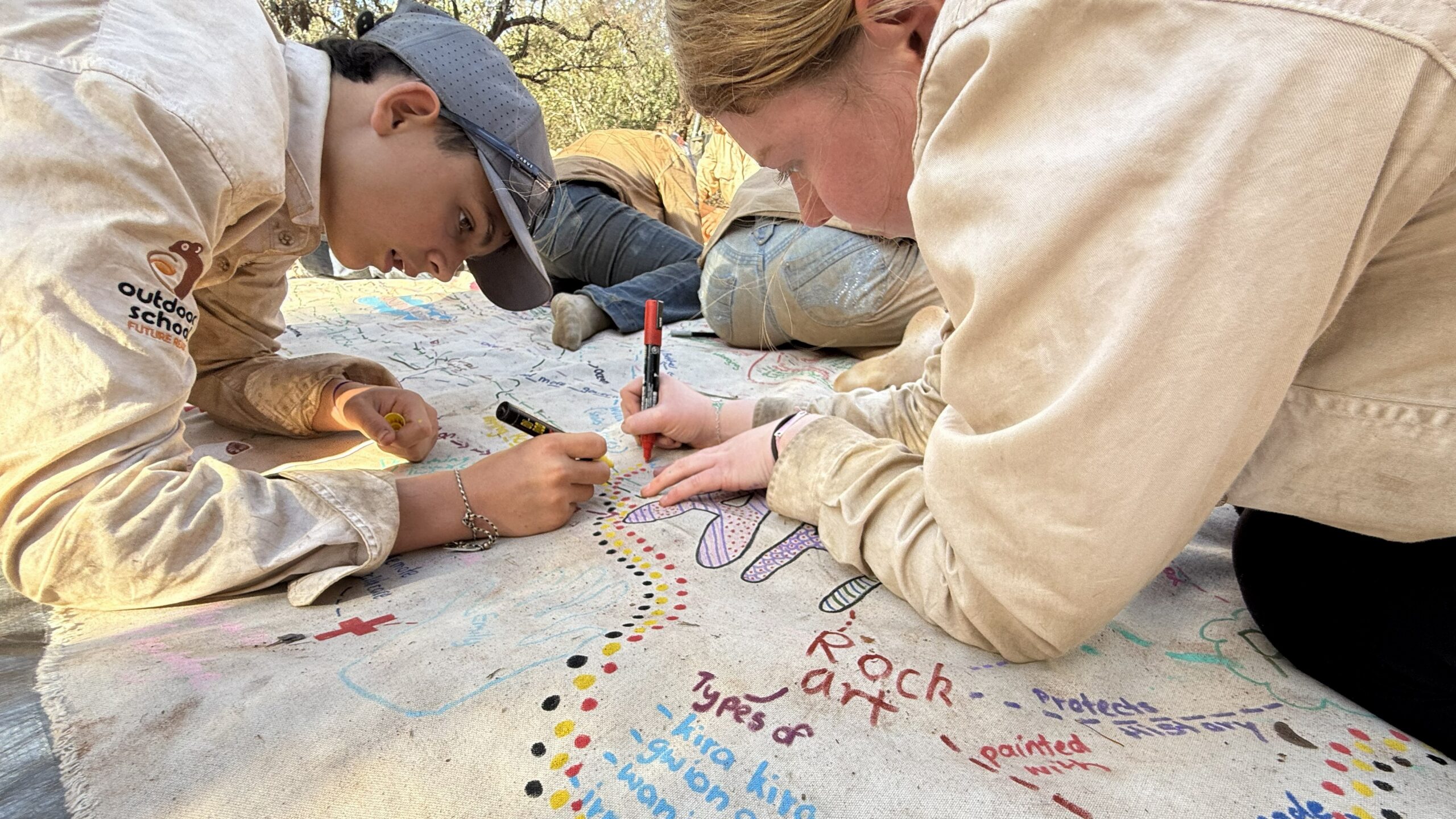
Students working on the Pathways Map
Groote Archipelago Songlines Archaeology Project – 2026 Field Season
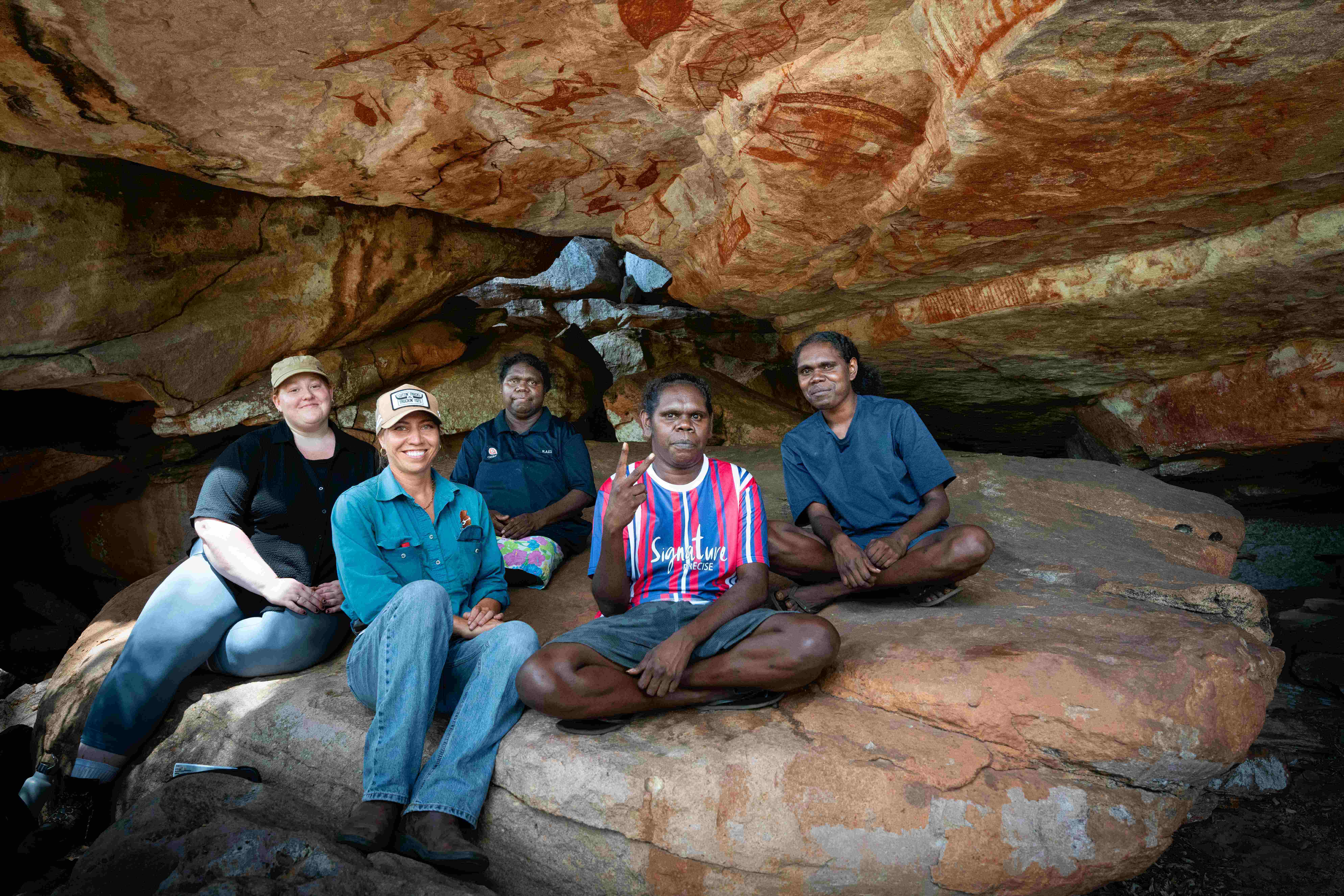
The team working on plants and women’s knowledge celebrating revisiting Angwurra in Groote Eylandt’s central plateau. Warnumamalya Traditional Owners Shirley Yantarrnga, Simone Yantarrnga and Liana Wurramarra, with Jalen Green (ANU) and Asia Sutton (HeliOps). Shirley and Simone worked with Annie Clarke in the 1990s during previous archaeological work in Yantarrnga Country.
Credit: Ian Ostericher
The Groote Archipelago Songlines Archaeology Project has completed a successful 2026 field season on Groote Eylandt, with excavations undertaken at two rock shelters connected to the Yinuma songline.
Working in collaboration with the Anindilyakwa Land Council and Yantarrnga and Maminyamanja clans, the project is investigating the long history of the songline and human occupation of the island. Fieldwork has already recorded more than 150 rock art sites, while archaeological evidence indicates occupation of Groote Eylandt dating back at least 6,500 years.
With support from Rock Art Australia, two additional archaeologists joined the 2026 fieldwork, contributing expertise in archaeobotany, environmental sampling, micromorphology and photogrammetry. The team will now analyse material recovered from the excavations alongside thousands of recorded rock art motifs, as well as earlier excavations undertaken in the 1990s.
Read the full field update on the website to discover more about the project’s findings and the next stages of this important research.
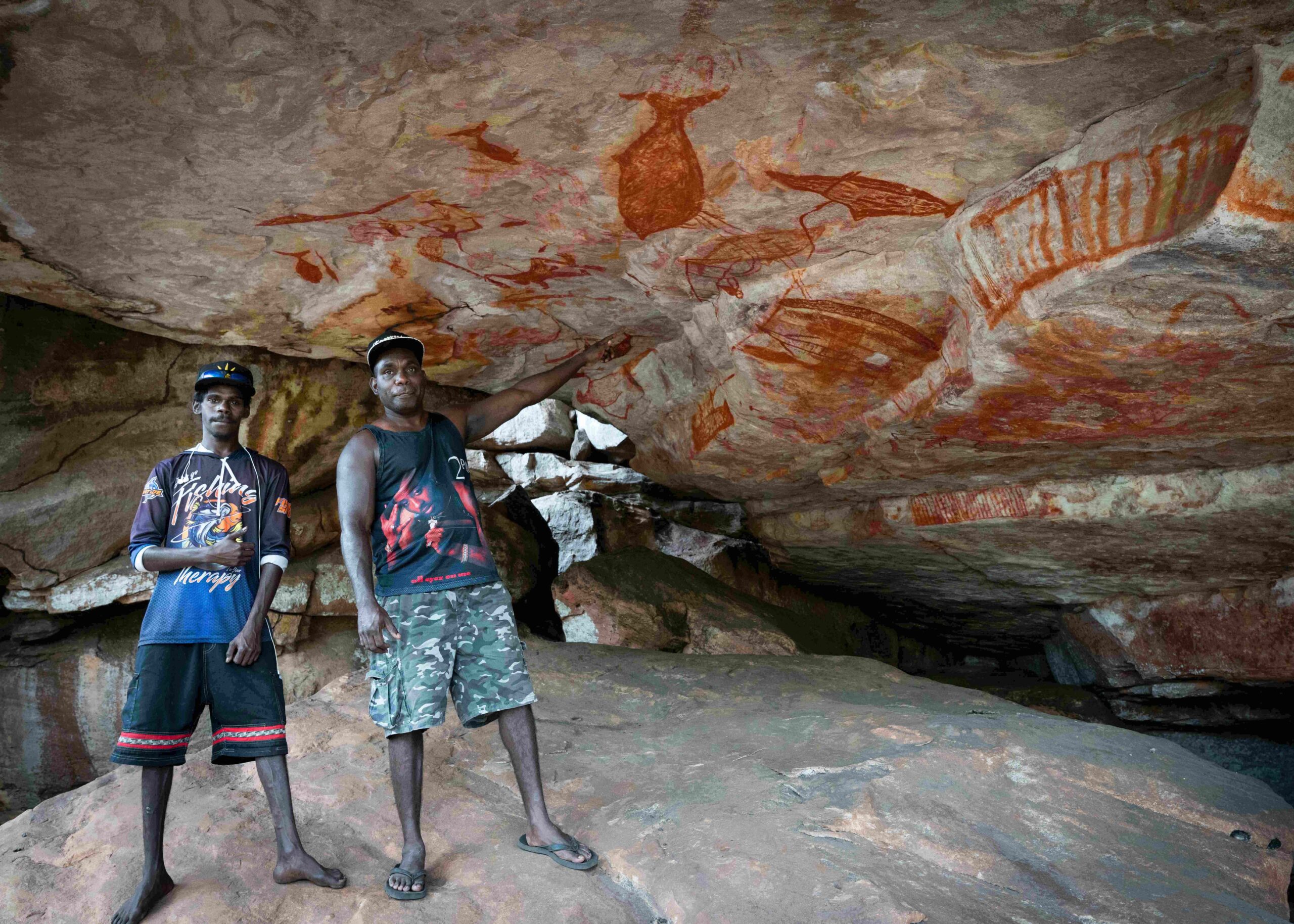
Jaiden Yantarrnga and Lee Rean Wurramarra visit the newly refound shelter near Angwurra, in Groote Eylandt’s central plateau.
Credit: Ian Ostericher
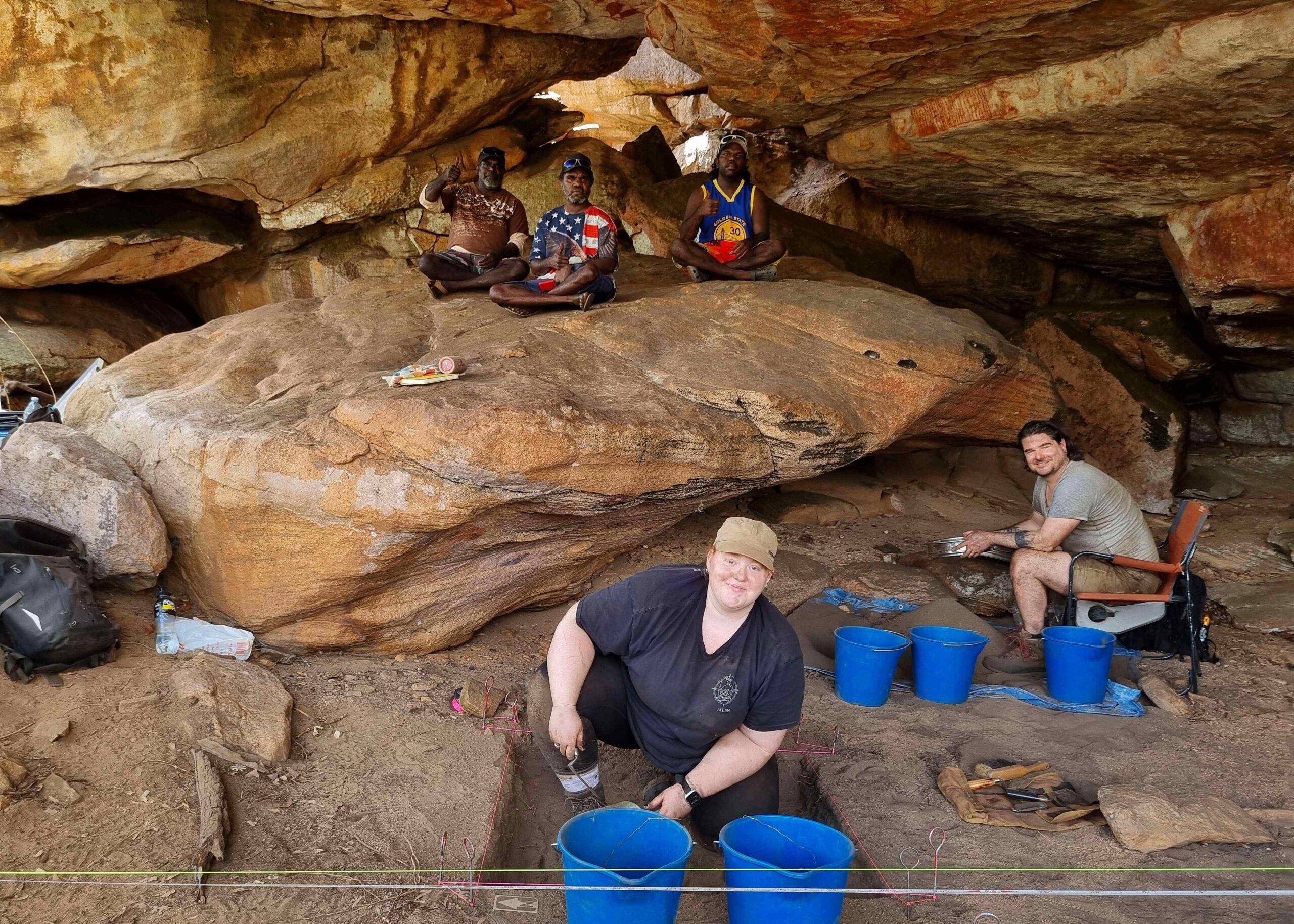
Jalen Green (ANU) commences excavation at newly found rock shelter near Angwurra in Groote Eylandt’s central plateau. Warnumamalya Traditional Owners Brendan Yantarrnga, Ananais Wanambi and Rixon Yantarrnga are sharing stories, with Ian Osteicher sieving.
Credit: Stevie Skitmore
Baranyi Yagu Barrabugu – Yesterday – Today – Tomorrow
A Database for the Times

In 2023, RAA provided a grant to the Aboriginal Heritage Office (AHO) to support the development of a new Aboriginal cultural heritage database, strengthening the monitoring, management and protection of irreplaceable Aboriginal sites across Sydney. The AHO is a partnership between Ku-ring-gai, Lane Cove, North Sydney, Northern Beaches and Willoughby Councils. Since its establishment in 2000, the AHO has documented around 1,000 registered sites across these Council areas. Its new database replaces outdated Word documents and Excel spreadsheets with a modern system that makes information easier to access, analyse and explore, including tens of thousands of photographs.
The AHO is continuing to transfer historical records into the database while exploring opportunities to expand its data collection, including 3D scanning of sites. This work is vital to protecting the approximately 120 rock art sites and 240 rock engraving sites across the partner Council areas, which face a range of natural and human threats. RAA is proud to support this important work and thanks our benefactors and donors whose generosity makes grants like this possible, helping safeguard Aboriginal cultural heritage for future generations.
From the Rock Art Australia Minderoo Chair in Archaeological Science University of Melbourne, Professor Rachel Popelka-Filcoff
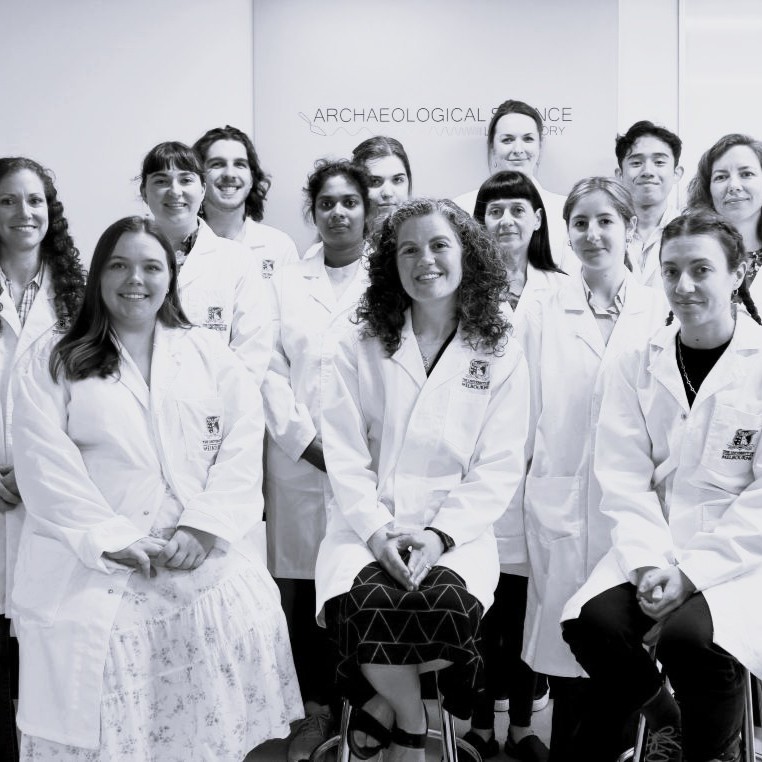
Rock Art Australia Minderoo Chair in Archaeological Science Professor Rachel Popelka-Filcoff has shared an update on the growing program of archaeological science research, teaching and engagement at the University of Melbourne. In Semester 1, the Archaeological Science Laboratory delivered the inaugural two-week intensive subject Introduction to Archaeological Science, welcoming postgraduate and external students from both science and archaeology backgrounds. The course introduced students to archaeological science in an Australian context, drawing on expertise across provenance, dating, rock art, museums and working with Indigenous partners, and received very positive feedback.
International engagement has also continued to expand. In June, Professor Popelka-Filcoff participated as a co-leader in the first planning workshop for a five-year International Atomic Energy Agency initiative focused on the preservation, protection, provenance and repatriation of cultural heritage. She also chaired a session at the Gordon Research Conference on tracing the histories of ancient worlds through trace chemistry, alongside members of the Archaeological Science Laboratory who presented their research.
Closer to home, Professor Popelka-Filcoff delivered an expert lecture on rock art analysis at the University of Melbourne’s Open Day, engaging prospective students and their families, and she continues to develop collaborative research proposals with France’s national cultural heritage facility, the Centre de recherche et de restauration des musées de France (C2RMF).
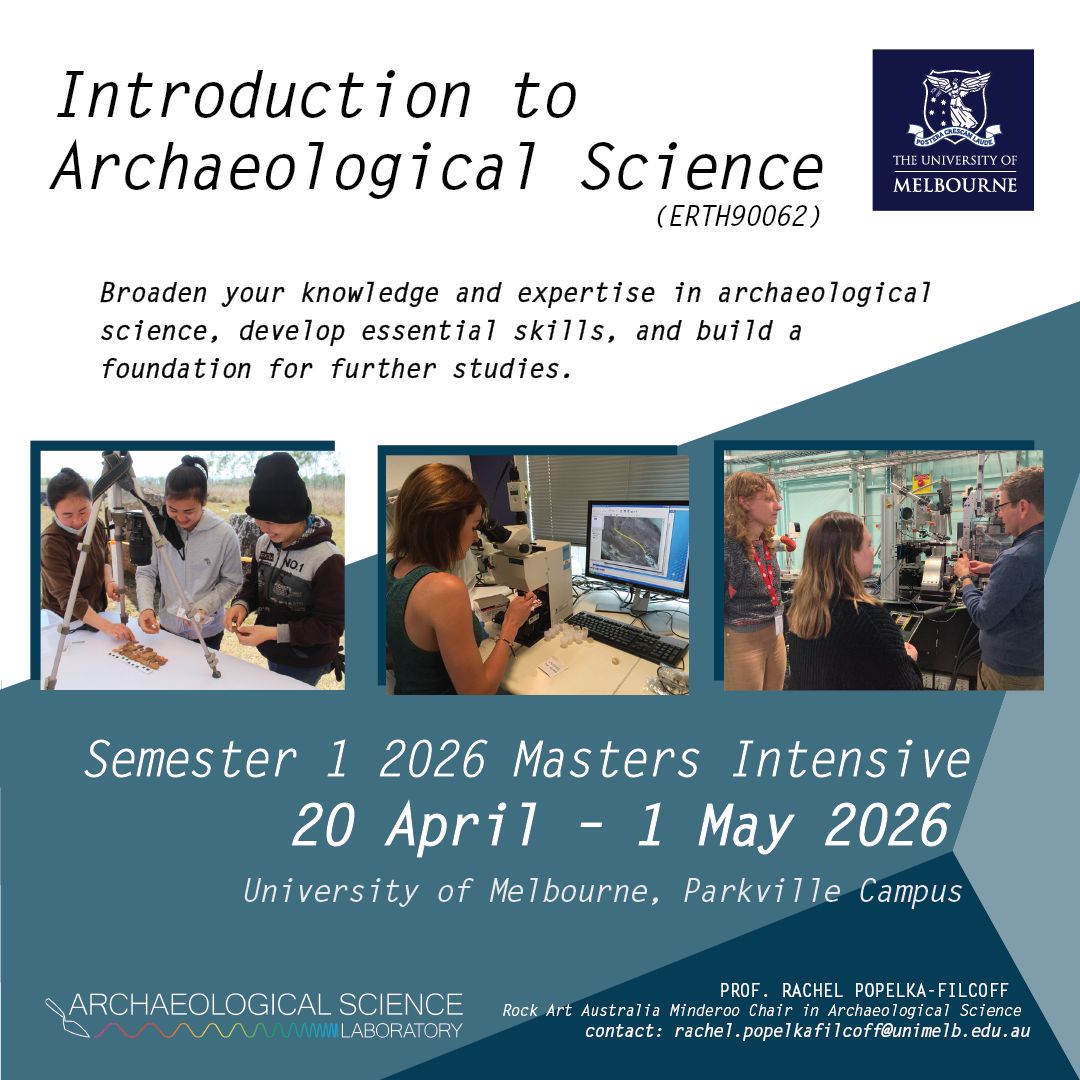
Course flyer: inaugural two-week intensive subject Introduction to Archaeological Science
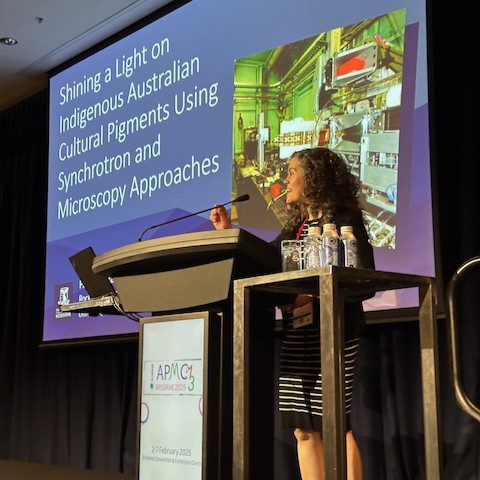
Professor Rachel Popelka-Filcoff
New Publications
Two new papers reveal 25,000 years of GunaiKurnai cultural practice
New research from the Rock Art Australia-supported project Before and after the Last Ice Age: GunaiKurnai archaeology along the Snowy has resulted in two new papers exploring long-term GunaiKurnai cultural practices and relationships with Country.
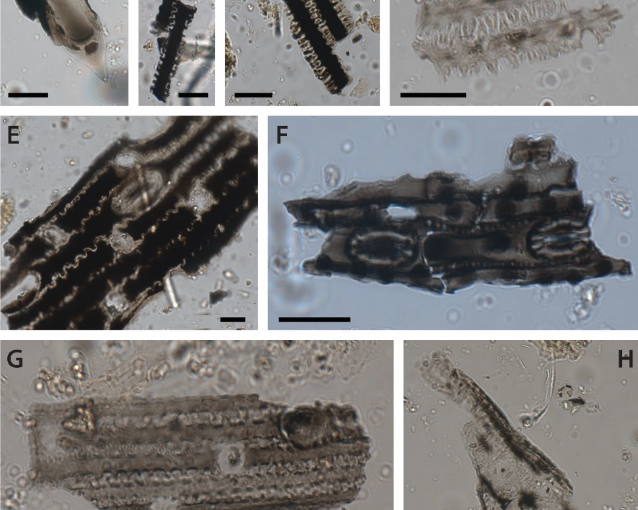
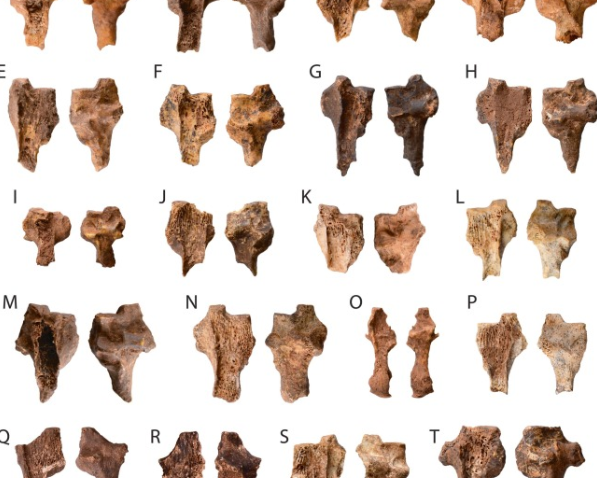
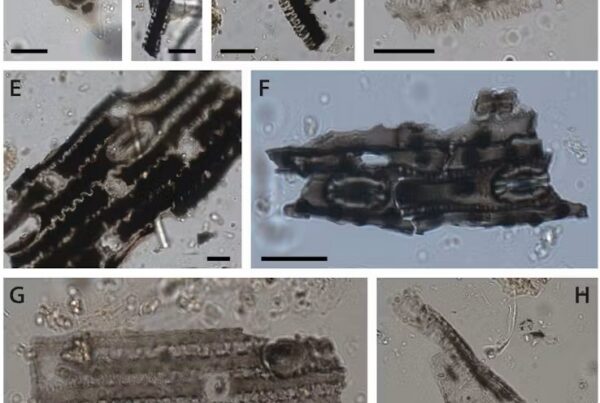
25,000 years of plant knowledge and cultural practice
Research at Cloggs Cave reveals how microscopic plant remains preserved in the cave are helping uncover 25,000 years of GunaiKurnai cultural practice. In partnership with the Gunaikurnai Land and Waters Aboriginal Corporation and Monash University, the study brings together scientific research and Aboriginal cultural knowledge to shed new light on enduring relationships between people, plants and Country.
A long history of kangaroo and wallaby bone modification
A second paper examines a distinctive pattern of longitudinal shearing found on kangaroo and wallaby heel bones (calcanea) from Waribruk (New Guinea II Cave).
The pattern indicates that people repeatedly modified these bones in the same way over some 18,000 years. Because the bones contain very little marrow and the breakage pattern would have provided inefficient access to it, the researchers conclude that marrow extraction was unlikely to have been the purpose.
The findings raise the possibility that the shearing was associated with tendon removal and/or a ritual practice, while further research is needed to understand how widespread and long-lived this practice was.
New publications from the Archaeological Science Laboratory, University of Melbourne
The Archaeological Science Laboratory at the University of Melbourne, led by Professor Rachel Popelka-Filcoff has recently contributed to two new publications advancing research into archaeological materials, provenance and trade.
One study examines the morphology, chemistry, provenance and trade of ancient Igbo-Ukwu glass beads, while a second investigates the implications of ochre source variability for provenance studies. Together, these publications demonstrate the laboratory’s contribution to developing scientific approaches that can reveal the origins, movement and use of archaeological materials.
Professor Popelka-Filcoff is also leading a new special issue of the Journal of Archaeological Science, “Worldwide Archaeological Science of Ochre: New Results and Challenges,” bringing together more than 20 contributions exploring the analytical study of ochre from diverse geographic, scientific and theoretical perspectives.
Events
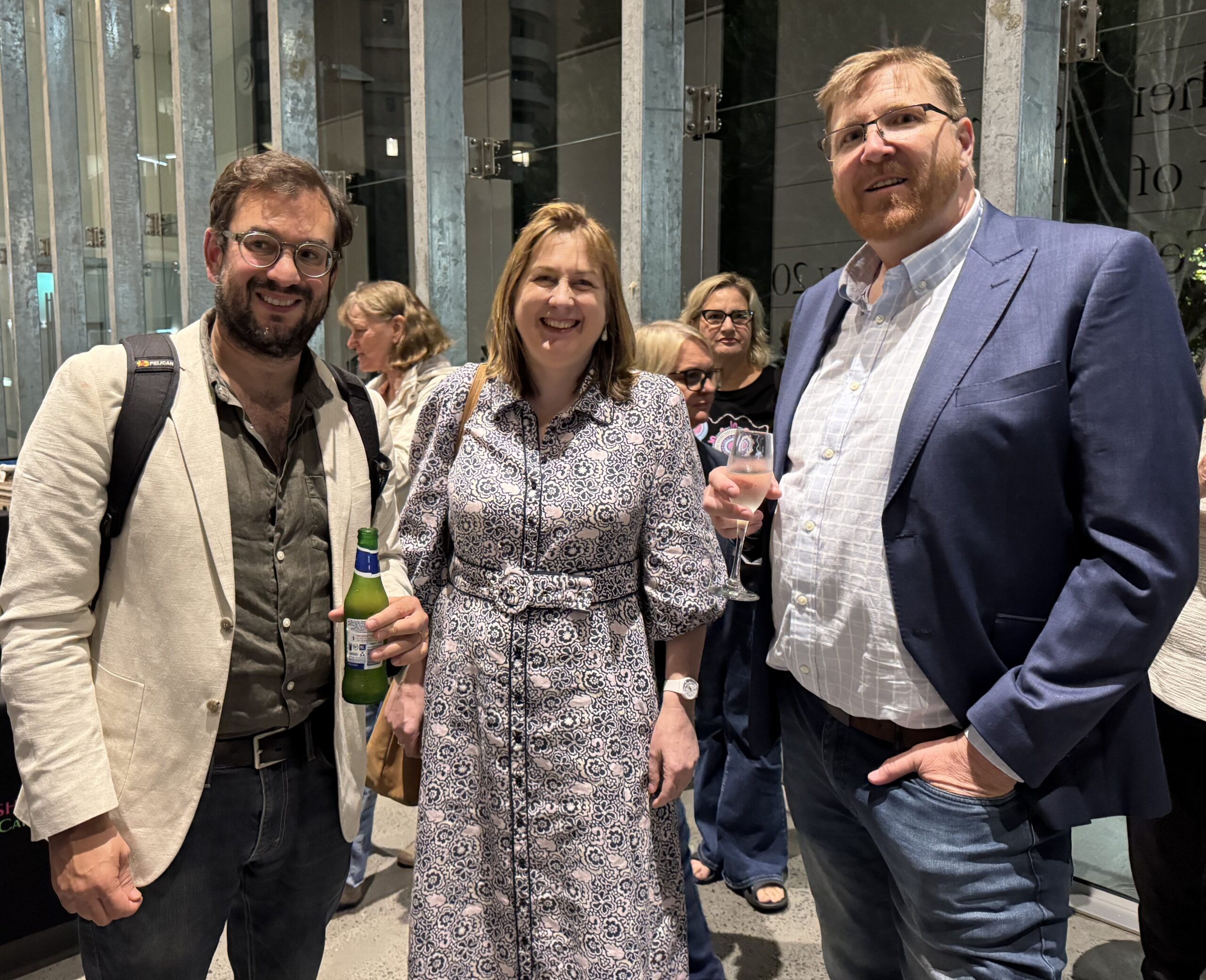
Director, Australian Research Centre for Human Evolution, Professor Julien Louys, RAA CEO Fiona Menzies, and Professor Chris Clarkson at the Brisbane lecture of the national tour – First Peoples and Rising Seas: Rewriting Australia’s Deep History hosted by Rock Art Australia in partnership with Griffith University. May 2026
As part of his role as Rock Art Australia Chair in Rock Art & Archaeology and Lead Chief Investigator of the major five-year Linkage Project Human Responses to Post-Glacial Sea Level Rise at Red Lily, Arnhem Land, Professor Clarkson is presenting his talk, “First Peoples and Rising Seas: Rewriting Australia’s Deep History”, at partner institutions across the country.
Two events have already been held in Brisbane and Sydney, with talks in Adelaide, Perth and Melbourne scheduled for October and November.
These events provide an important opportunity for Rock Art Australia to share knowledge, invite collaboration, and bring conversations about Rock Art Australia-funded research to communities across the country.
Past Events
International Symposium on Archaeometry in Turin, Italy
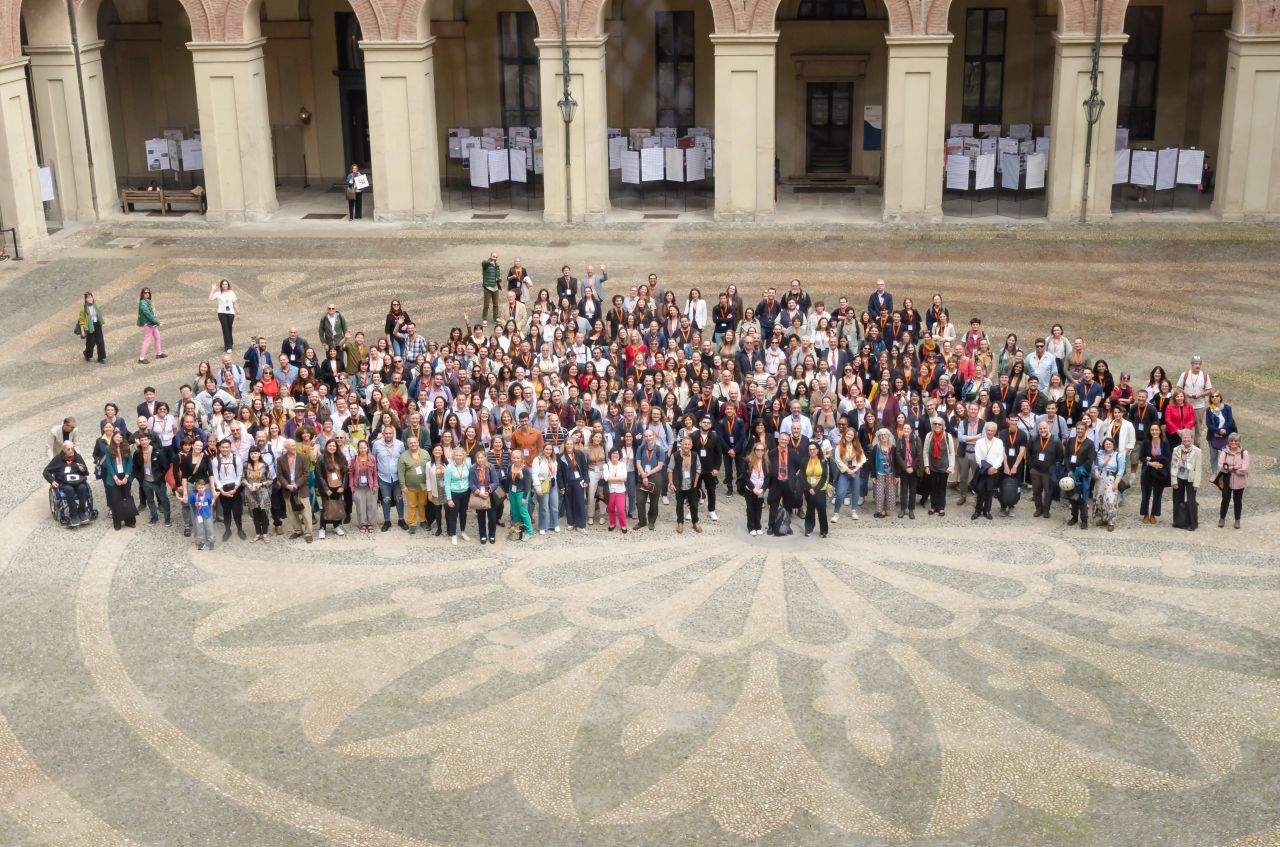
Researchers from the Archaeological Science Laboratory at the University of Melbourne represented their research at the International Symposium on Archaeometry (ISA) in the beautiful city of Turin, Italy.
Dr Helen Green, Dr Louise Shewan, and PhD candidates Faris Ruzain and Antonia Papasergio presented their latest research through a combination of oral and poster presentations, highlighting work in archaeological science and Australian Indigenous rock art.
The conference provided an excellent opportunity to engage with leading researchers from around the world. A particularly valuable outcome was the establishment of connections with researchers from America, Mexico, and France working on dating techniques using mineral accretions. These interactions enabled the group to exchange ideas, develop new collaborations, and gain insights into the latest advances in archaeological science and rock art research.
The team returned to Australia with new ideas, knowledge, and exciting opportunities for future collaboration.
2026 Howitt Lecture
Presented by Dr Helen Green
Hosted by Geological Society of Australia and Royal Society of Victoria
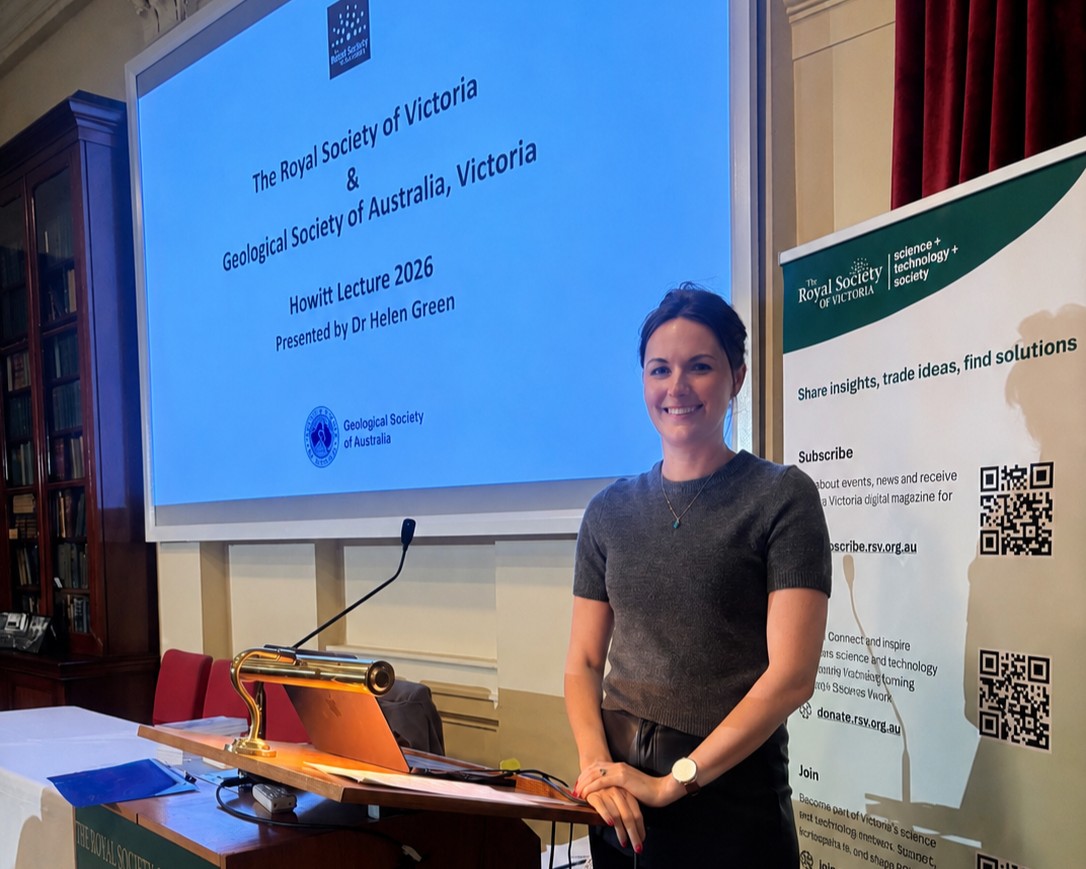
Watch Dr Green’s presentation, with a warm welcome by Rob Gell, President of the Royal Society of Victoria
2026 ANZ LA-ICP-MS & LIBS User Group Meeting
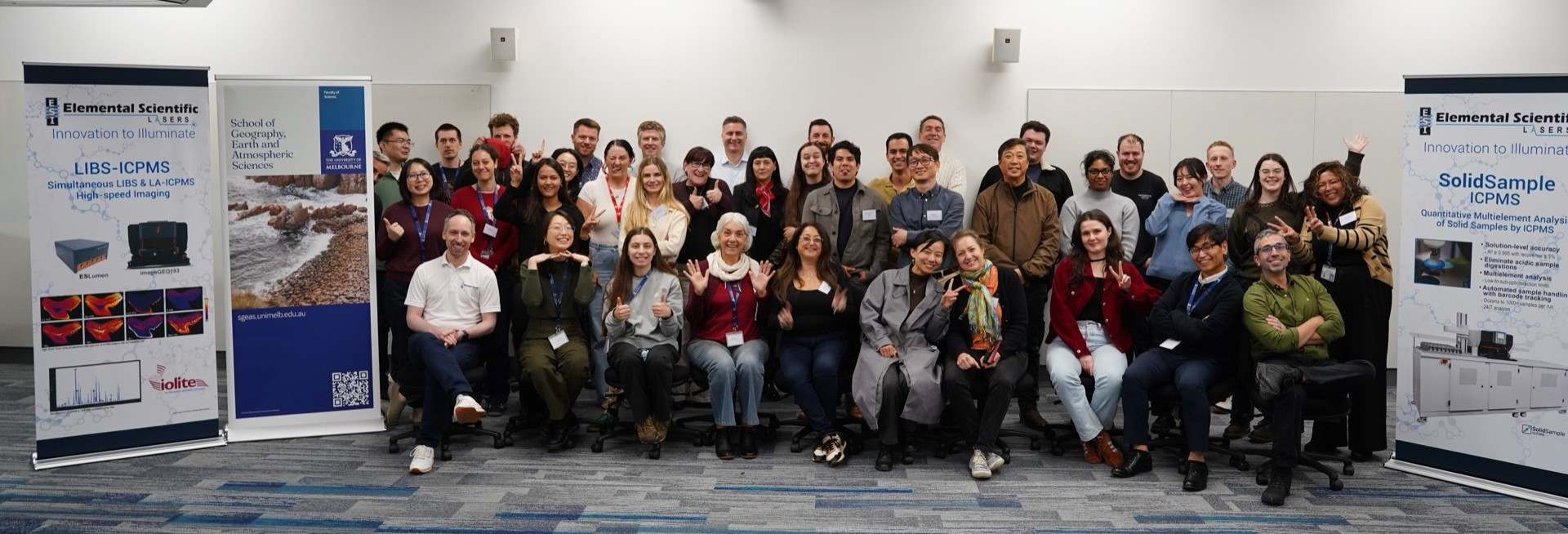
Rock Art Australia was proud to be a sponsor of the 2026 ANZ LA-ICP-MS & LIBS User Group Meeting, held at the University of Melbourne in June.
The meeting brought together researchers, students, industry and government to share advances in laser-based analytical techniques, instrumentation, data workflows and applications across geoscience and related fields. With more than 50 registrants, the event was a great success.
Congratulations to the organisers on an excellent and highly engaging meeting!
Protect Cultural Heritage & Strengthen Australia’s Research Future
Since the beginning, Rock Art Australia has been supported by a committed community of donors. Their support has enabled groundbreaking research, the establishment of fully endowed Research Chairs, and the sharing of knowledge through public programs, publications, and engagement with universities, schools, and communities across Australia.
Today, this collective effort continues to support leading and emerging researchers, advance the protection of globally significant heritage, and contribute to the knowledge and leadership that will carry this work forward.