Communicating Rock Art Research: Culture, Community & Connection

Each year, we hold the Science Advisory Council (SAC) Research Workshop, led by the SAC Chair, to highlight the significance and outcomes of research funded through Rock Art Australia and to provide a forum for exploring new collaborative projects and future directions in co-designed rock art and cultural heritage research.

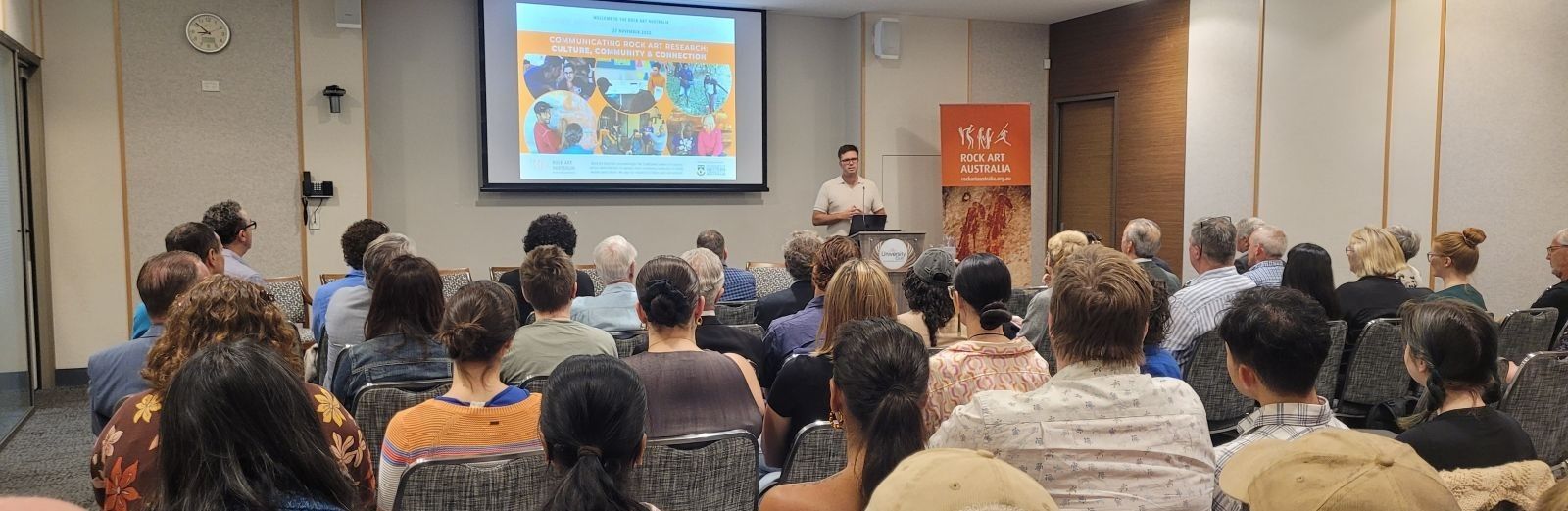
We welcome leading researchers, emerging scholars, First Nations community partners, and students to present their work to our Board of Directors and supporters, fostering a day of dialogue, knowledge-sharing, and collaboration.

The 2025 workshop took place at the University of Western Australia’s University Club, with support from the UWA’s School of Social Sciences.
Download the 2025 SAC Workshop Program

The day began with a Welcome to Country by Alton Walley, a respected Noongar cultural leader, who generously welcomed us onto Whadjuk Noongar Country.

This year’s workshop, led by Helen Green, was marked by a renewed sense of energy and direction. This reflects the evolving Science Advisory Council (SAC), which is bringing new perspectives and stronger connections with First Nations research communities.

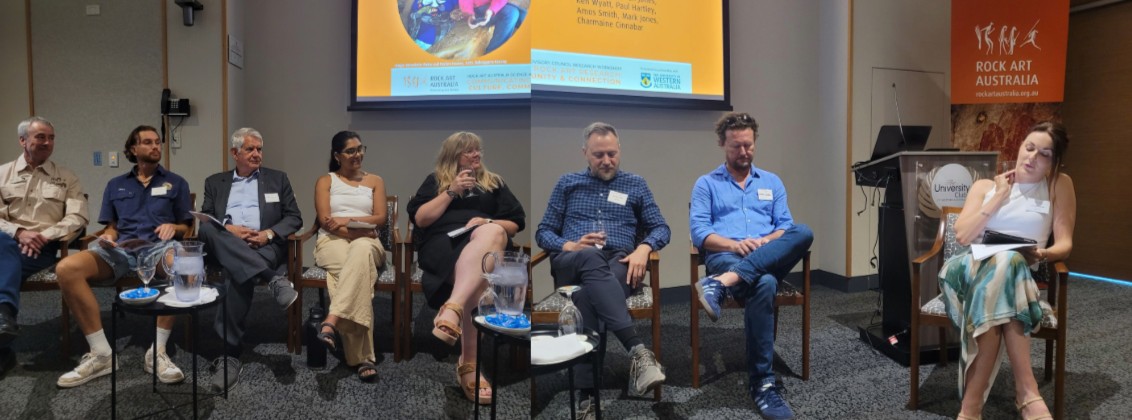
It was particularly encouraging to see a more diverse mix of speakers and audience. This was evident in the opening panel with Ken Wyatt, Ray Tobler, Tristen Jones, Paul Hartley, Amos Smith, Mark Jones, and Charmaine Cinnabar, who explored how to communicate research with impact. The discussion focused on strategies for co-designing research, identifying community priorities, and sharing outcomes in ways that support Ranger programs, strengthens school engagement, and connects with donors.

Panel from left to right: Paul Hartley (Outdoor School), Amos Smith (Balanggarra Ranger Coordinator), Ken Wyatt (RAA Chair), Charmaine Cinnabar (SAC Member, James Cook University), Tristen Jones (SAC Member, The University of Sydney), Ray Tobler (SAC Member, Australian National University), Mark Jones (Photographer & Filmmaker), Helen Green (SAC Chair, The University of Melbourne)

Across the program, we heard updates from established projects alongside previews of new RAA-supported research. A clear theme was the importance of collaboration and co-designed, two-way research with Traditional Owners, an approach that is central to the projects RAA supports and was reflected throughout the workshop.

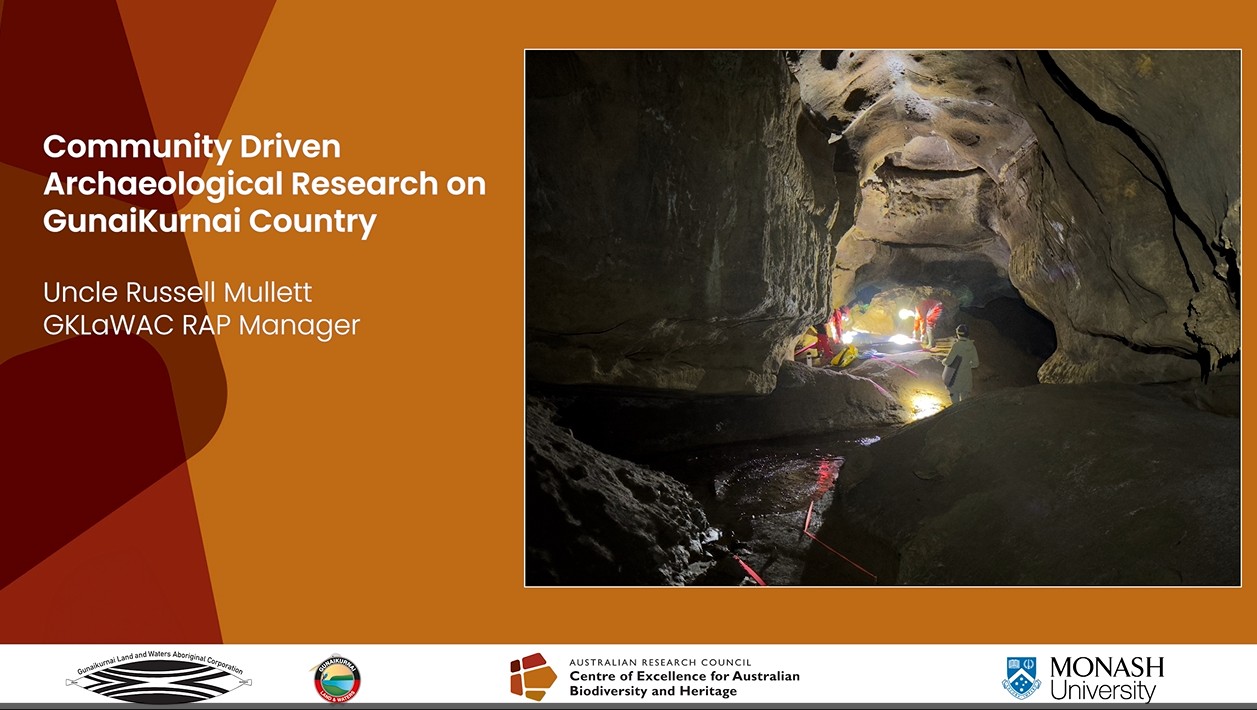
Highlights included Russell Mullett (Gunaikurnai Land and Waters Aboriginal Corporation, GLaWAC), who joined remotely from GunaiKurnai Country to share new insights into finger flutings in east Gippsland, from the RAA funded project: Before and after the Last Ice Age: GunaiKurnai archaeology along the Snowy, work that is grounded in a much stronger cultural and archaeological context.

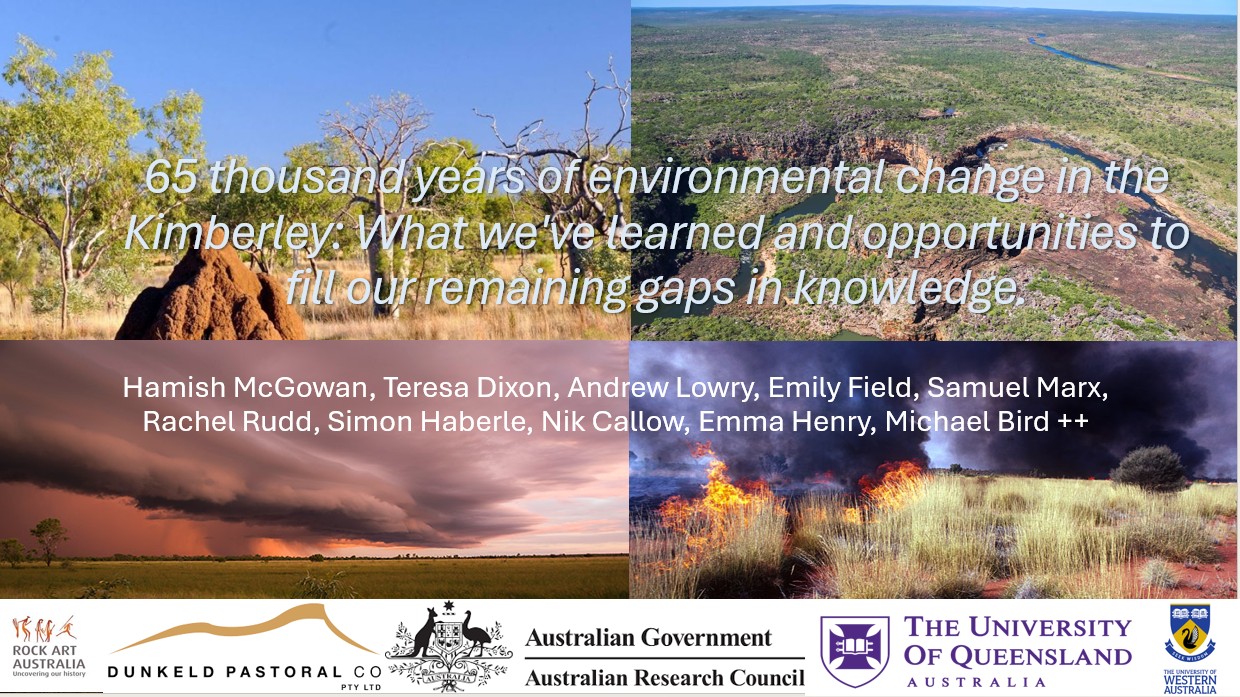
Hamish McGowan and Andrew Lowry presented the first palaeoclimate maps for the Kimberley, part of the developing e-Atlas, for the Unlocking Environmental Archives project, offering detailed insights into climate change over the past 50–65,000 years and its impact on people and rock art.

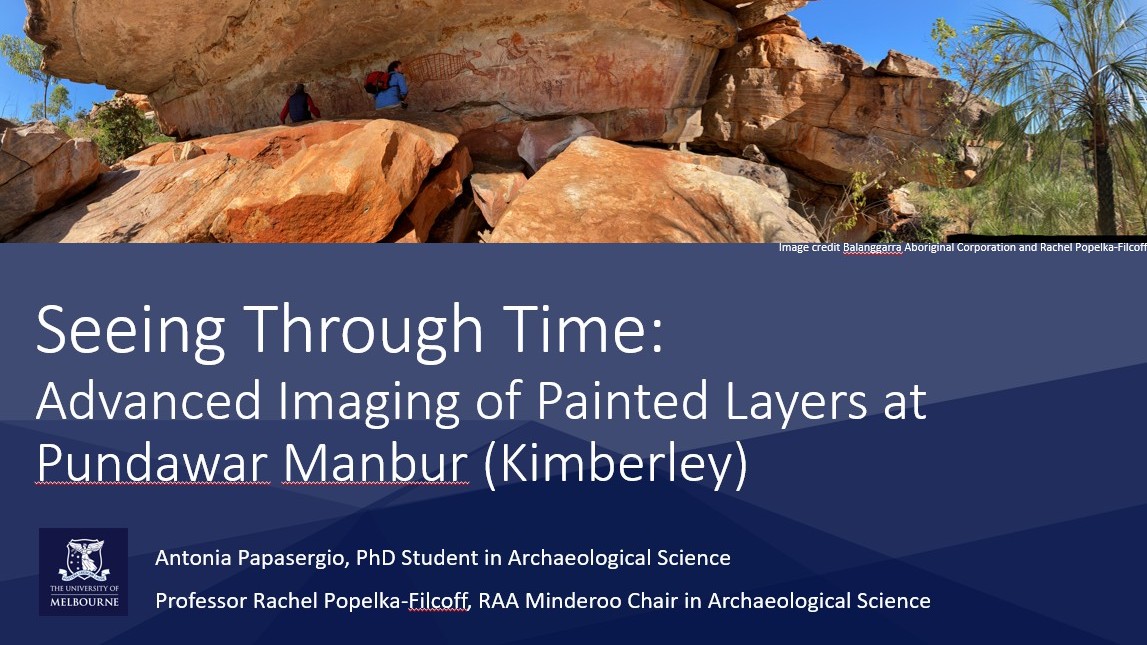
Other presentations showcased innovative approaches, including virtual reality tools for education in remote communities, through hands-on workshops by Louise Shewan, hyperspectral imaging of pigments by Antonia Papasergio & Rachel Popelka-Filcoff, and Belinda Martin’s genomic research into microbial communities in rock shelter surfaces.

We also heard about several exciting new projects just getting underway. These included collaborative research led by Chris Clarkson, Tristen Jones, and the Njanjma Rangers at Red Lily Lagoon in western Arnhem Land, supported by a new ARC Linkage Project with RAA.

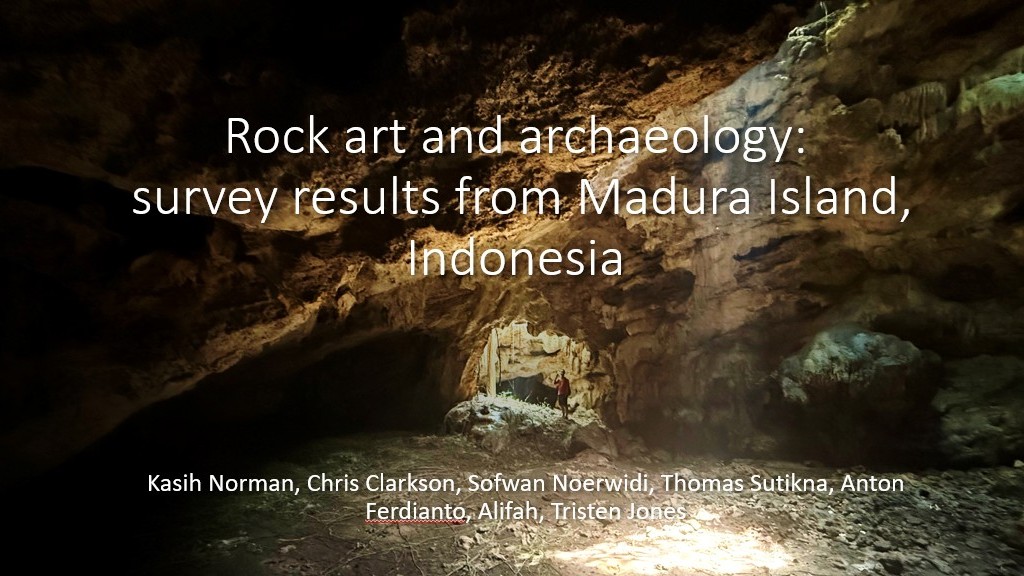
Kasih Norman’s work on sea-level change across Indonesia and northern Australia, also points to important future directions.

Sam Harper’s research in the Cockburn Ranges builds on a decade of RAA-supported work with Balanggarra and Kwini people across their determination area in the north-east Kimberley, including Kimberley Visions, Kimberley Rock Art Dating, and the Cockburn Ranges seed-funded project, which have generated extensive datasets and academic outputs with direct application for the management of cultural places by Balanggarra ranger teams.

Guided by Balanggarra and Kwini leadership and focused on community benefit, this work is bringing together new and legacy data to explore how rock art maps stories and reflects changing climate over time, with future priorities centred on on-Country training, intergenerational knowledge transfer, and the two-way delivery of research outcomes.

Overall, the workshop highlighted how rapidly the field is evolving, with new discoveries in archaeology, genomics, and geochronology pushing timelines further back across Island Southeast Asia and northern Australia.

Following a decade of major multidisciplinary projects, this year’s gathering made it clear that Rock Art Australia is entering an exciting new phase, defined by strong partnerships, greater diversity, and a clear vision for the future.

Download the 2025 SAC Workshop Program

SAC Workshop 2025 Program

YOU, TOO CAN MAKE A DIFFERENCE!

DONATE NOW